
Top Signs You Need Air Duct Cleaning Service – Don’t Ignore These
Most people picture a dusty vent register when they imagine dirty ducts, but that visible dust is actually one of the later-stage signs. By the time accumulation shows up at the supply vents, the system has usually been moving particulate matter through your living spaces for months. The earlier clues are subtler: a musty smell that returns after cleaning, rooms that never heat or cool evenly, allergy symptoms that flare indoors even with fresh filters. Below, we connect each sign to what’s physically happening inside the ductwork, so you can judge how serious it is rather than just ticking a box.
If reading this makes you want a professional opinion instead of a DIY project, call (877) 492-4238 for a free estimate.
Why Dust at Your Registers Is a Late Warning, Not an Early One
Dust collecting on the supply registers means the duct surfaces upstream have already reached saturation. A forced-air system constantly pulls return air, filters it, and pushes it back through the ducts. When a duct’s interior coating of dust and debris gets thick enough, airflow scours particles loose and deposits them at the nearest opening – your register grille. So a grille that needs wiping down every couple of weeks is telling you the lining behind it is loaded.
In Pelham Bay’s older housing stock, that buildup often includes more than household dust. Soot from decades of heating, street particulates drawn in through return grilles near windows and doors, and legacy construction debris from past renovations all settle inside duct runs. Flexible duct, common in older retrofits, has a ribbed interior that traps this material more aggressively than smooth sheet metal.
Here’s a quick way to check before you call anyone:
- Remove a supply register grille and look at the interior surface with a flashlight.
- Wipe the inside of the boot – the transition between duct and grille – with a white cloth.
- Note whether what you see is loose dust, a felt-like mat, dark staining, or visible growth.
- Check whether the buildup is even across registers or concentrated in certain rooms.
That description matters. It tells a technician where the problem sits and how deep it goes.
What a Musty Odor Actually Tells You About Your Ducts
A musty smell that returns within days of cleaning points to contamination on duct surfaces, and often specifically to moisture. Dust alone is dry and largely odorless. When the smell is earthy, damp, or like a wet basement, the likely mechanism is condensation or a small leak creating enough moisture for microbial growth on duct lining, insulation, or the evaporator coil area. This is where a symptom crosses the line from “cleaning is due” to “inspect for a source first.”
A few things separate nuisance odor from a real problem:
- Cleaning is likely the answer if the smell is stale and dusty, fades after airing out the house, and there’s no staining or growth visible at registers.
- Inspection is needed first if the odor is persistently damp, you see dark staining or fuzzy growth inside the duct or around the coil, or the smell worsens when the system runs.
- Duct damage is possible if the odor is strongest in one room and that room’s airflow is also weak – a disconnected or torn duct can pull air from unconditioned space.
In our experience, Pelham Bay homes with basements or systems that run hard in humid months are the ones most likely to develop this kind of moisture-driven odor. It’s not something to mask with an air freshener. The source has to be found and the affected surfaces cleaned and treated, which is why we approach sanitizing with products like Guardsman-grade treatments rather than just a scented spray.
Uneven Airflow and Where It Points Inside the System
Rooms that never get comfortable – one bedroom cold, the far end of the house starved for air – often trace back to duct obstructions or leakage rather than the furnace itself. This is a different signal from odor or dust. It’s telling you something about the physical integrity of the duct runs.
Here’s the mechanism: a forced-air system is balanced so every branch gets a designed share of airflow. When a duct run is crushed, disconnected at a joint, or blocked by debris or a collapsed liner, the air reroutes. Rooms closer to the air handler get more, rooms farther away get less. So uneven comfort is often a symptom of duct damage, not dirt – and that’s an important distinction, because cleaning alone won’t fix a disconnected run.
That’s the reason we pair cleaning with repair and sealing. If a duct is leaking or disconnected, contaminating the air and wasting energy, sealing it addresses the source. Cleaning a broken duct system just means you’re cleaning a system that will refill with the same material. When you call about uneven rooms, describe which rooms are affected and whether the problem came on gradually or suddenly – gradual points to buildup, sudden points to a break.
Allergy Symptoms That Worsen Indoors Even With Clean Filters
Filter maintenance and duct contamination are two separate problems, and one does not solve the other. A filter captures particles at the air handler, but everything that settles on duct surfaces downstream stays there. So homeowners can change filters on schedule, keep the house reasonably tidy, and still notice that their allergies flare up specifically indoors – morning congestion, itchy eyes, and sneezing that ease when they leave the house.
This is the sign that most often gets misread, because the assumption is “the filter is clean, so the air must be clean.” Air that passes through a dirty duct can pick up and redistribute fine particles, allergens, and microbial spores that have accumulated on the lining. People dealing with asthma or seasonal allergies are often the first to notice because they’re more sensitive to airborne particulate.
This is also where equipment matters. Consumer shop-vacs and home vacuums don’t have the HEPA-level filtration to capture fine particulate – they tend to stir it up instead. That’s why we run Nikro HEPA-rated vacuums and Abatement Technologies tools on contaminated systems: they’re built to capture and remove the material, not just move it around the room. If your indoor symptoms are worsening and filters aren’t helping, that’s a strong reason to have the duct interior inspected and described accurately before deciding on a scope.
When to Call a Pro (and Why It’s Not Always About Cleanliness)
Most signs in this article point to a cleaning issue that a professional-grade system can resolve. A few point to something more serious, and those are worth escalating rather than waiting. Call a professional if you notice any of the following:
- Visible mold-like growth inside the duct or at the coil area.
- A persistent damp smell that returns quickly after cleaning.
- Sudden, dramatic airflow loss to a single room.
- Duct runs you can see that are disconnected, crushed, or torn.
- Pest activity or nesting material in the ductwork.
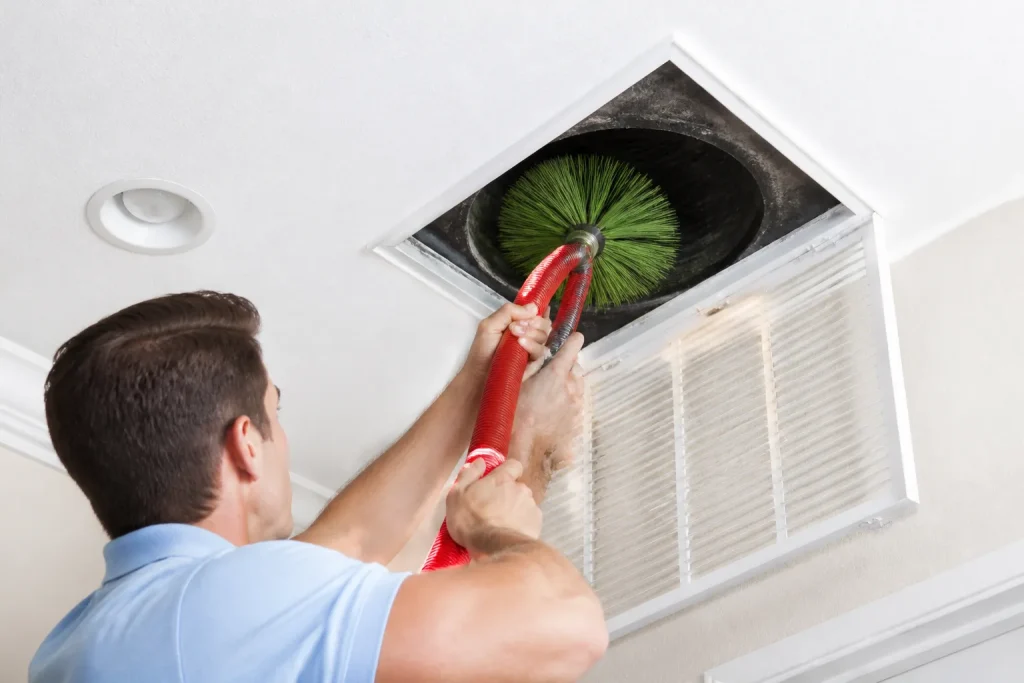
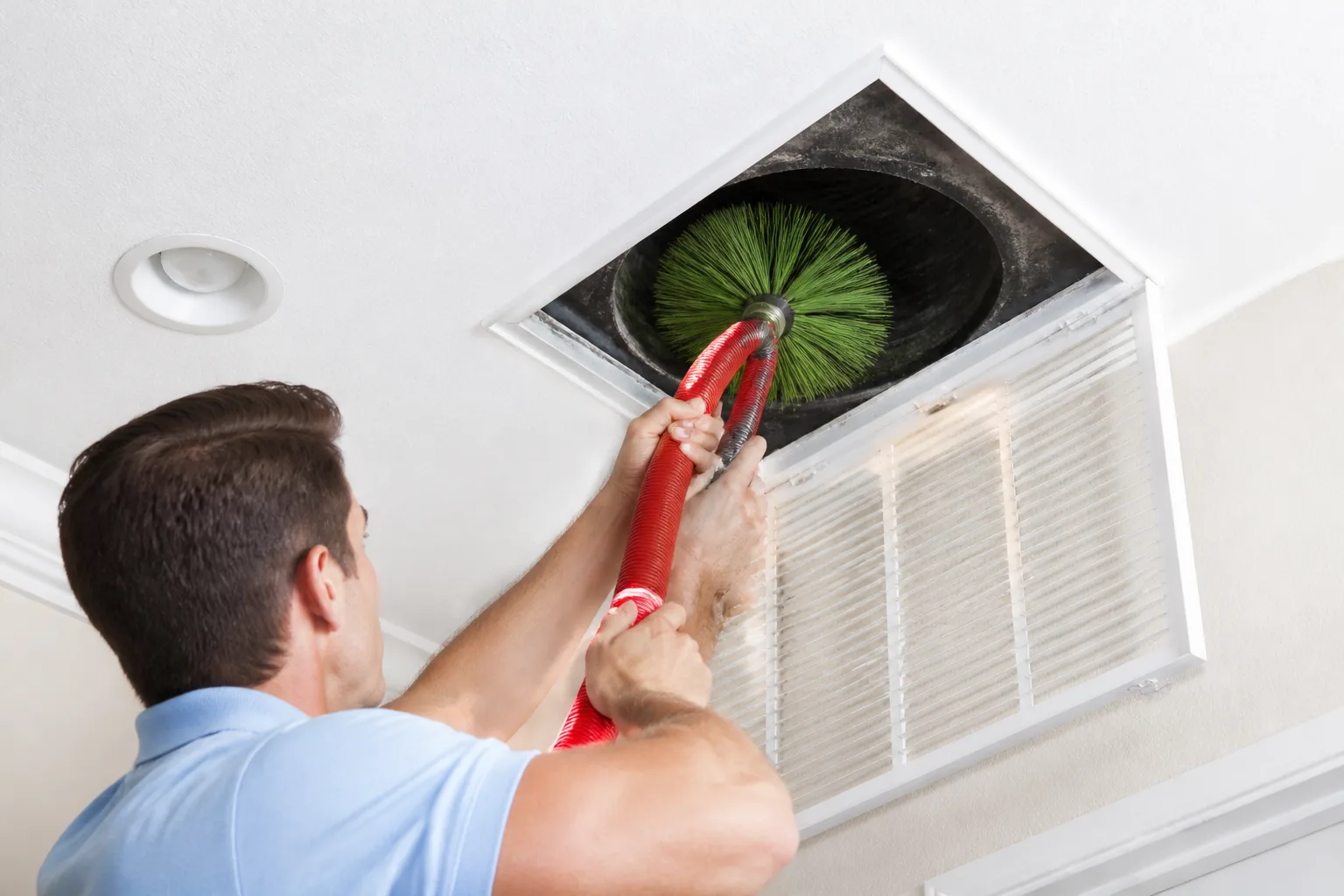
For routine cleaning and inspection, the standard for us is contact cleaning with Rotobrush systems and HEPA capture with Nikro. Those tools let a technician clean the full interior surface of the duct and remove the loosened material under vacuum, which is a different standard from dislodging dust and hoping it stays in the filter. If you’re evaluating providers, ask which systems they use and whether they offer sealing and sanitizing alongside cleaning – because a clean duct that still leaks is a short-lived fix.
Related services in Pelham Bay: if your problem is more than dust, we also handle dryer vent cleaning and HVAC cleaning as part of a full-system approach. For thorough air duct cleaning built around contact cleaning and HEPA capture, one call covers the whole forced-air system. And when contaminants are the concern, our Air Duct Cleaning Pelham Bay team brings Abatement-grade tools and a sanitizing service using Honeywell and Aprilaire products to finish the job.
The Bottom Line
The signs of dirty ducts run in a sequence. Weak airflow and indoor allergy symptoms show up first, odor and register dust later, and visible register buildup is one of the last stages before it’s obvious to everyone. Reading the early signals means you catch contamination before it’s been distributed through your home for months. A quick self-inspection at the registers gives you the vocabulary to describe what you’re seeing, and a technician can then tell the difference between “cleaning is due” and “something needs repair first.”
If you’re in Pelham Bay and want a straight answer about what’s going on inside your ducts, Air Duct Cleaning Pelham Bay offers free estimates. Call (877) 492-4238. We answer 24/7. Fast dispatch from 7am to 7pm, Sunday through Friday.
Frequently Asked Questions
The earliest signs are usually indoor allergy symptoms that flare up even with clean filters, uneven heating or cooling between rooms, and a stale or musty smell when the system first kicks on. Visible dust at the registers is a later sign – by then the duct lining has typically been loaded for months.
Yes. Filters capture particles at the air handler, but dust, allergens, and spores that settle on duct surfaces downstream stay there and can be redistributed through the living space. That’s why indoor symptoms can persist even when your filter is changed on schedule.
Dust is dry, loose, and mostly gray or brown. Mold appears as dark staining or fuzzy growth and usually comes with a damp, earthy smell that returns within days of any cleaning. If you see growth or notice a persistent damp odor, have it inspected before cleaning so the moisture source gets addressed.
Older homes often have accumulated soot, street particulates, and debris from past renovations inside the ductwork, and flexible duct with ribbed interiors traps material more than smooth sheet metal. If you’re noticing the signs above, a full-system inspection and cleaning is the sensible starting point.
Uneven or weak airflow often signals a physical duct problem – a crushed, disconnected, or blocked run – rather than plain dirt. Cleaning won’t fix a broken duct, which is why repair and sealing are worth asking about alongside a cleaning quote.
Written by the team at Air Duct Cleaning Pelham Bay.
Need Air Duct Cleaning Help?
Call Air Duct Cleaning Pelham Bay - the local pro we connect you with is licensed and insured, with free written estimates in Pelham Bay.
(877) 492-4238