
Last updated November 25, 2026
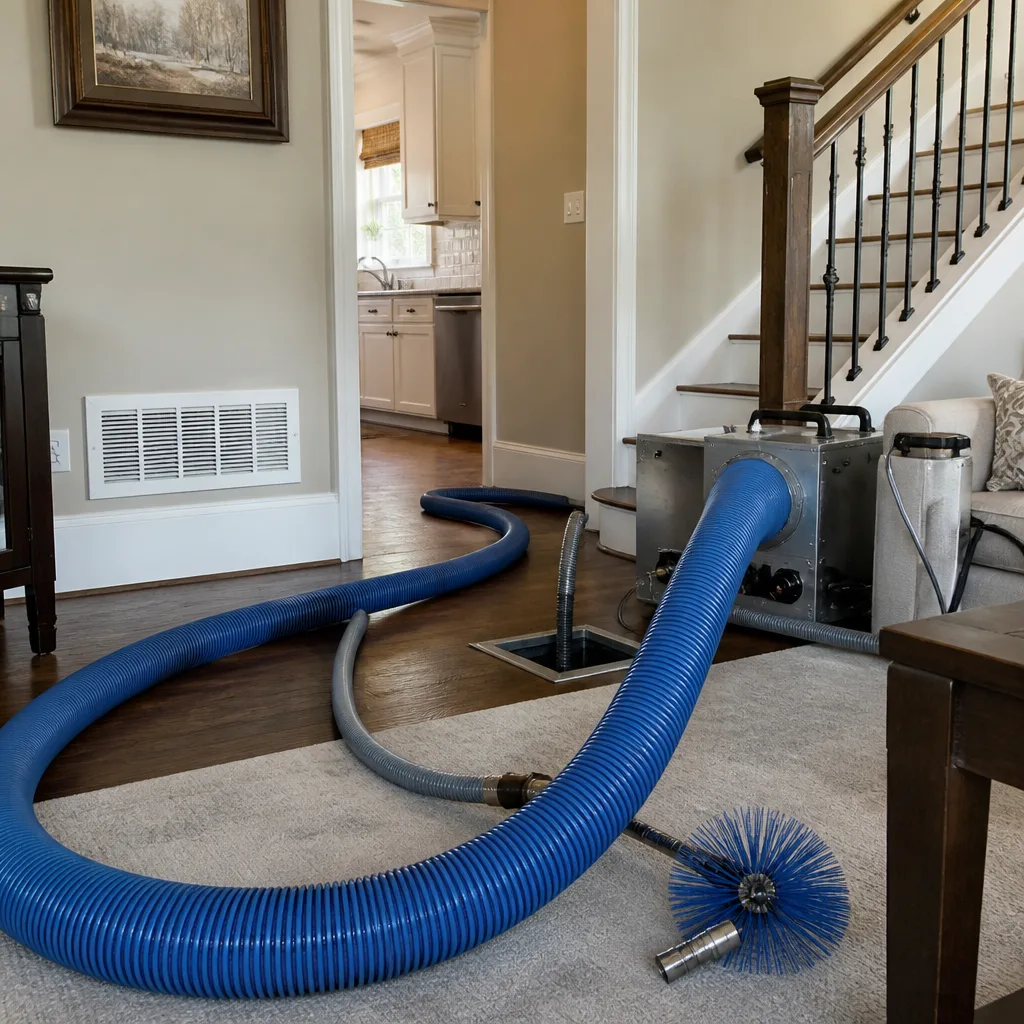 Whole-home duct cleaning
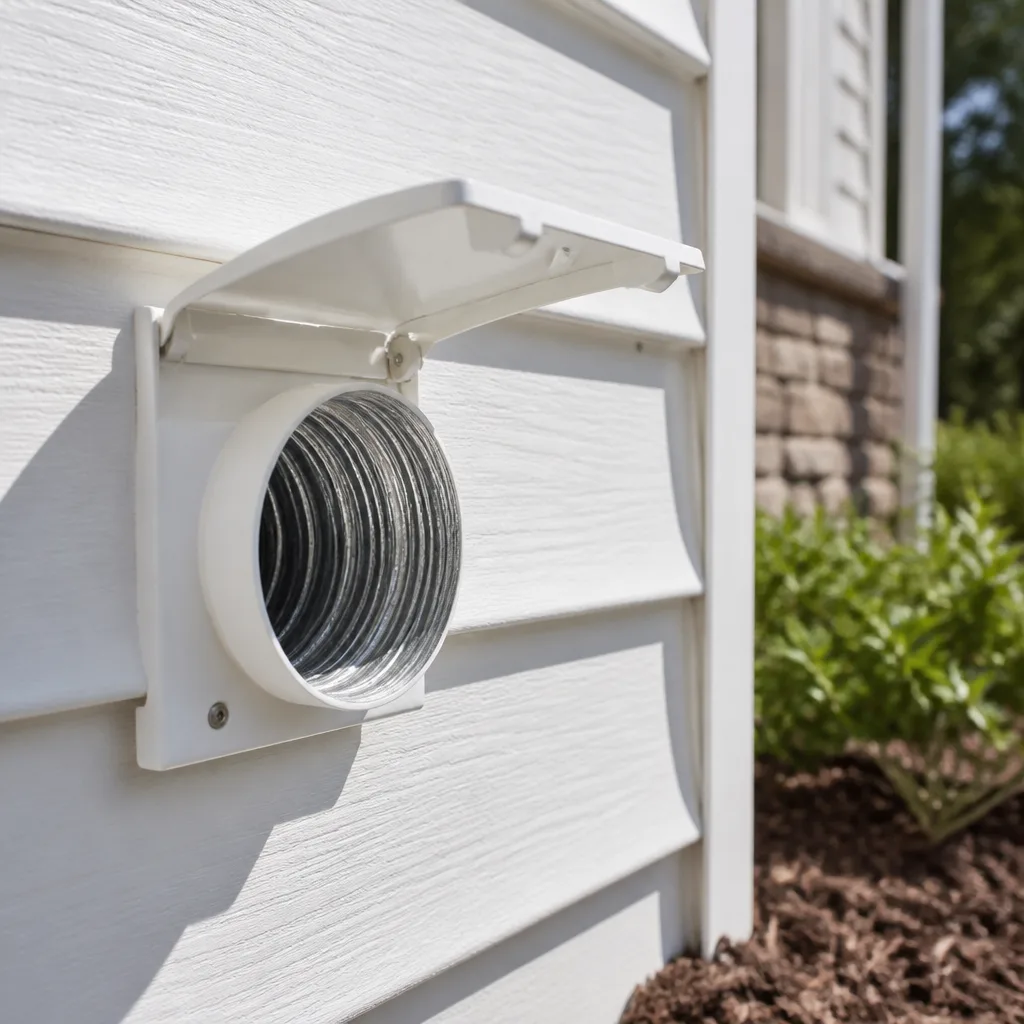 Dryer vent cleaning
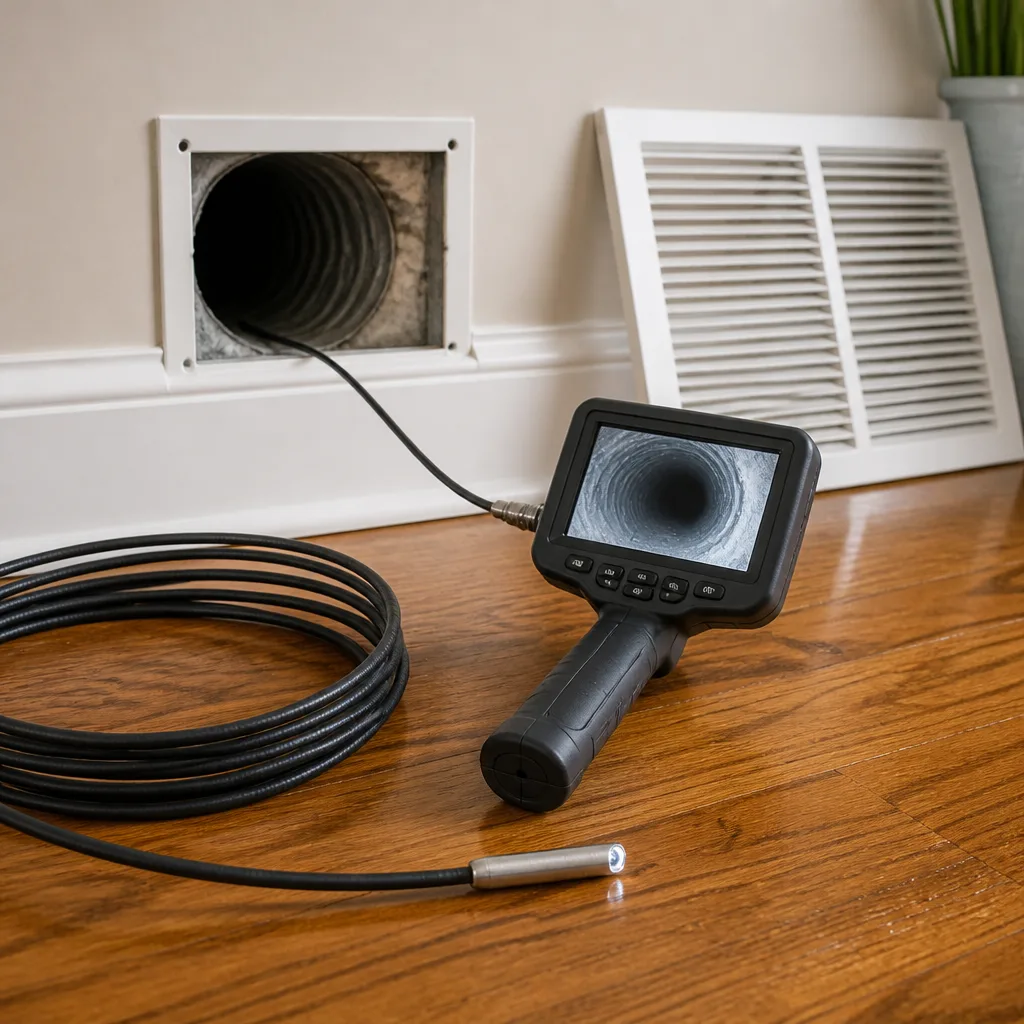 Camera inspection
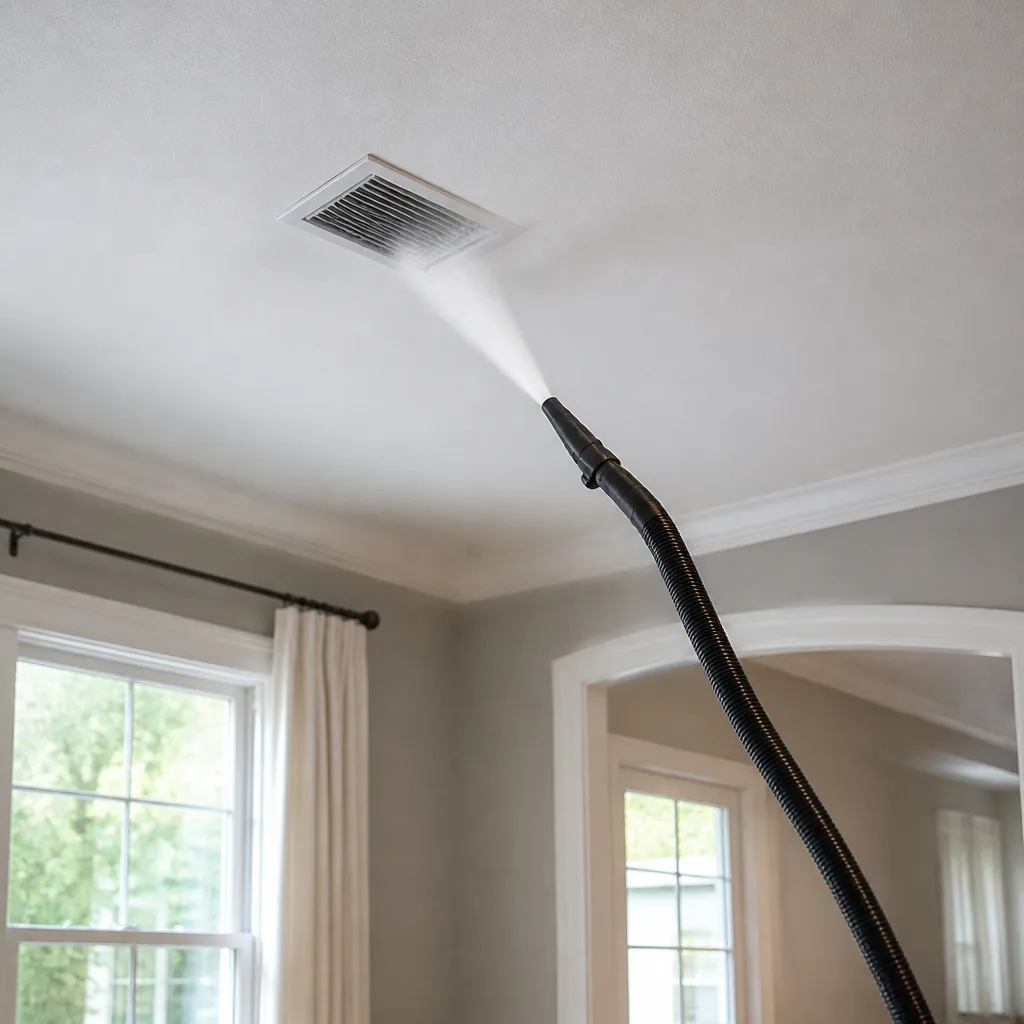 Sanitizing & deodorizing
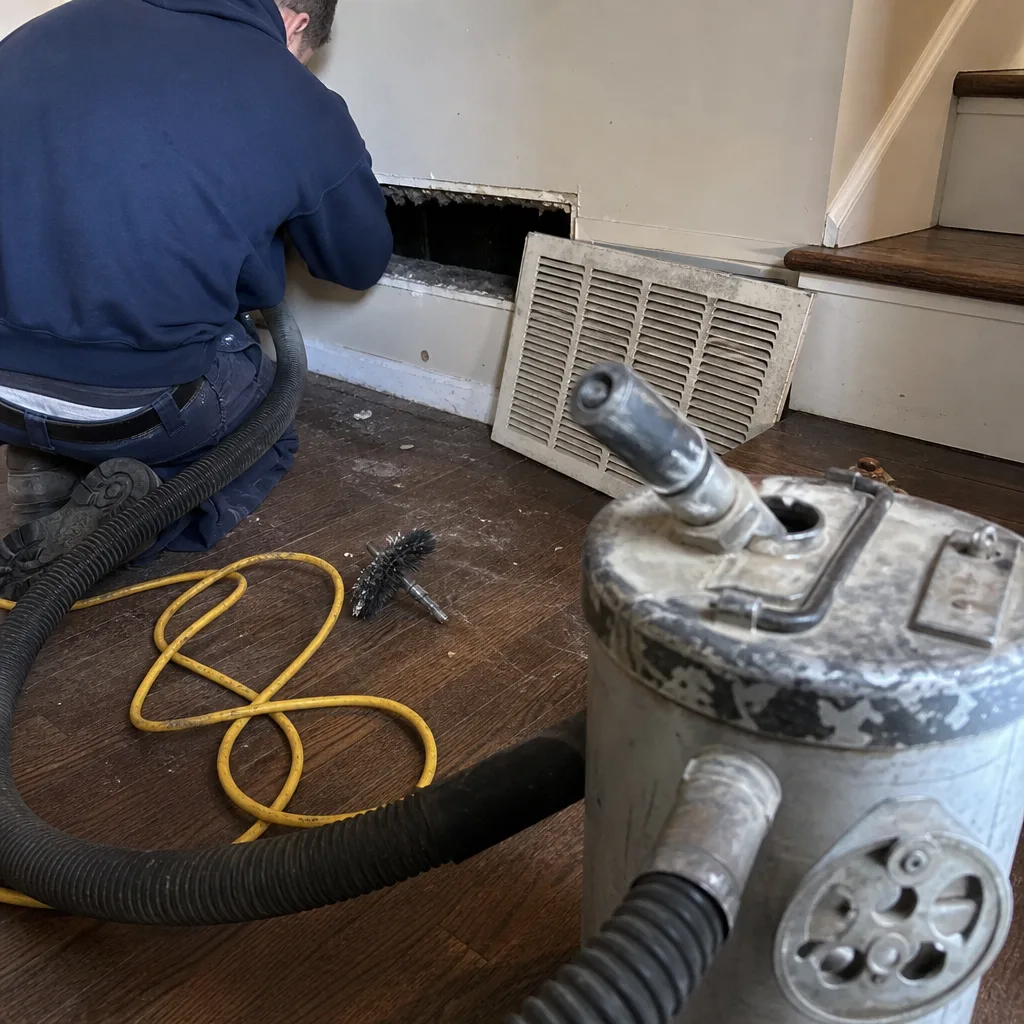
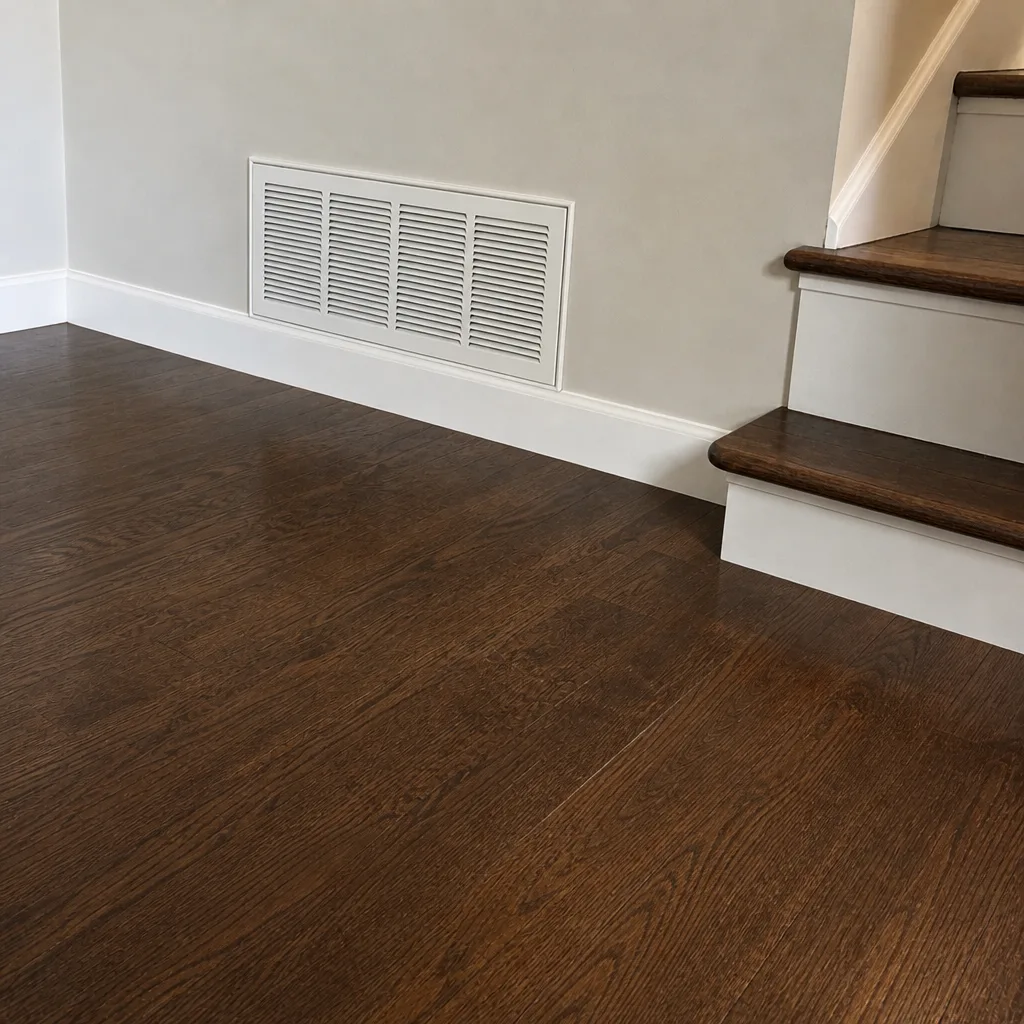
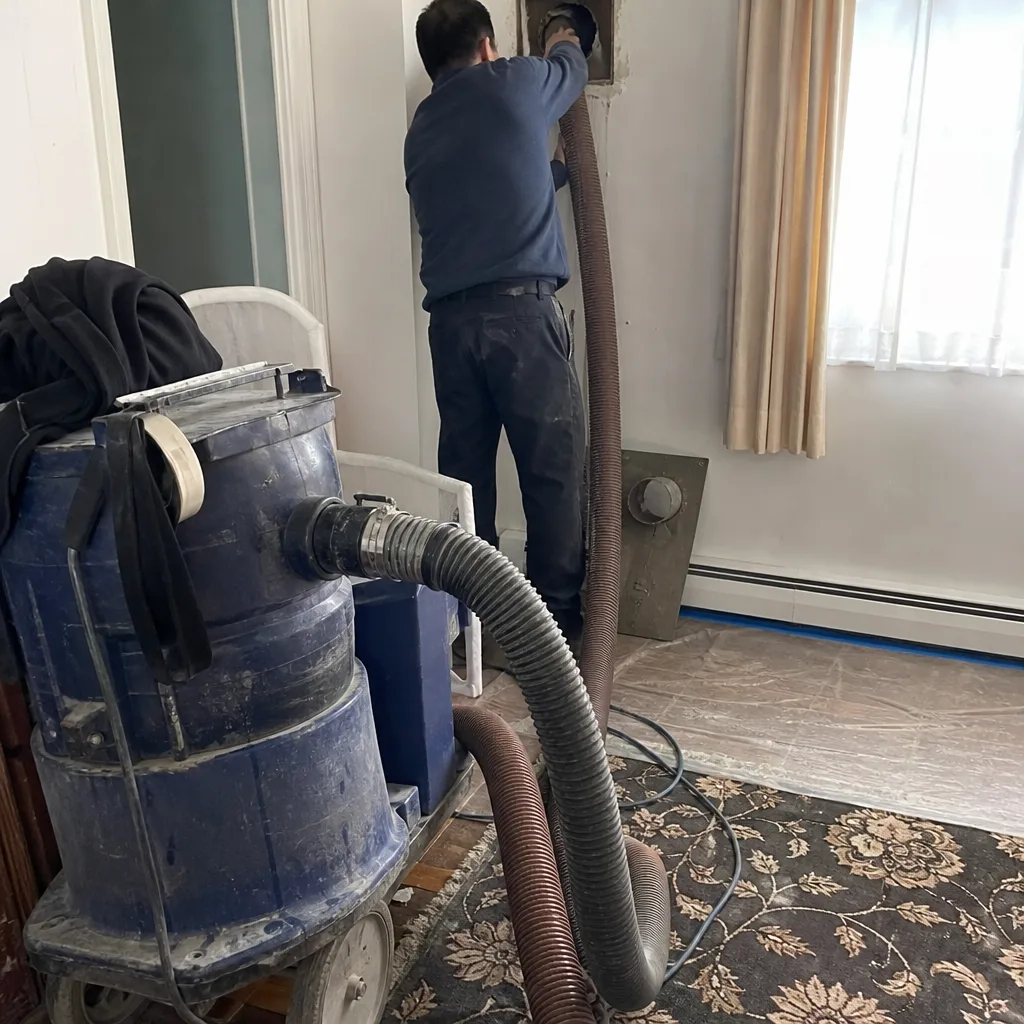
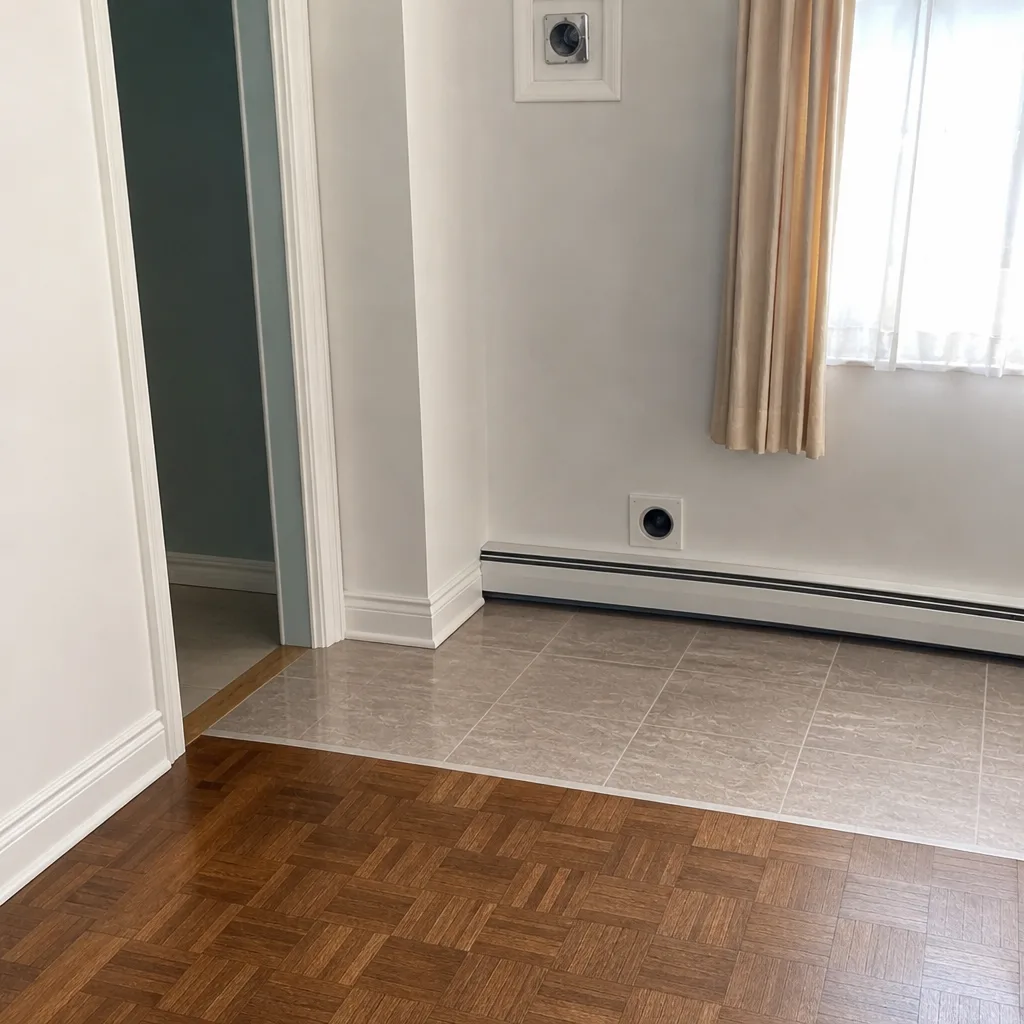
Whole-system duct and dryer vent check with before-and-after photos - you see exactly what came out of your vents
That "$99 whole-house special" is a bait ad - the real number appears once they are in your hallway, or the "clean" is a shop-vac at the register. We photograph the inside of your ducts before and after instead.
Air Duct Cleaning Permits, Codes & Inspections in Pelham Bay, NY: What You Need to Know
No permit is required to clean your ducts in New York City. But the moment a technician cuts a new access panel into sheet metal ductwork or reseals a disconnected trunk line, the job has crossed into alteration work that falls under NYC Mechanical Code jurisdiction. That line is where Pelham Bay homeowners get caught, usually months or years later, during a home sale, a refinance appraisal, or an insurance claim that asks for proof the system was touched by someone accountable. This guide walks through where cleaning ends and mechanical alteration begins, how the DOB permit portal works, what Local Law 97 means for multi-family buildings, and how to document a job that needs no permit at all.
Quick Answer
Cleaning and sanitizing existing ductwork in Pelham Bay does not require a permit from the NYC Department of Buildings. Modifying the system does. Cutting new access openings, relocating registers, replacing or reconfiguring trunk lines, or changing the duct layout falls under NYC Mechanical Code alteration rules and generally requires a DOB permit pulled by a licensed professional. Insulation disturbed during cleaning on pre-1980 ductwork can also trigger NYC DEP asbestos notification rules. Documentation – before-and-after photos and a written assessment – is your record when no permit applies.
Styles & brands we work with
- Whole-home duct cleaning
- Dryer vent cleaning
- Camera inspection
- Sanitizing & deodorizing
Table of Contents
- Cleaning Versus Alteration: Where the Line Sits
- What the NYC Mechanical Code Covers
- Local Law 97 and Multi-Family Documentation
- Reading the DOB Permit Portal Before You Hire or Buy
- Asbestos and Pre-1980 Duct Insulation
- Documentation That Works Without a Permit
- What an Inspection Actually Looks At
- Common Mistakes to Avoid
Cleaning Versus Alteration: Where the Line Sits
The distinction is simpler than most people expect. Cleaning removes material from a duct system that stays exactly as it was built. Alteration changes the system. One is maintenance. The other is construction.
Under the NYC Mechanical Code, mechanical work that alters a duct system’s configuration, capacity, or routing is work requiring a permit, and it has to be performed or supervised by a licensed professional. Cleaning a system that is intact does not modify its configuration, so no permit is issued for it. The moment someone adds, removes, or repositions duct components, that changes.
Here’s how it breaks down in practice:
- No permit: source removal of dust and debris from existing ducts, register and grille cleaning, coil and blower cleaning, sanitizing an intact system, dryer vent cleaning.
- Permit generally required: cutting a new access opening in sheet metal ductwork, relocating a supply or return register, replacing a section of trunk line, adding or removing a branch run, changing the duct layout during a renovation.
- Case by case: sealing leaks with mastic, taping joints, or installing a small access panel on flexible duct, where the work is repair rather than reconfiguration. Ask your contractor and, if it’s ambiguous, ask the DOB.
In Pelham Bay’s older housing stock, this line matters more than in a new-build subdivision. Homes around the Pelham Bay Park edge and the streets near Buhre Avenue often have duct systems that were originally gravity-fed or added piecemeal, and previous owners sometimes cut their own access holes or sealed off branches to redirect air. When we open a system and find that kind of patchwork, we can’t tell you it’s compliant. We can tell you it’s there, and the answer is a licensed HVAC contractor and possibly a permit, not a cleaning.
What the NYC Mechanical Code Covers
The NYC Mechanical Code governs the design, installation, maintenance, and alteration of mechanical systems, including ductwork, in buildings across the five boroughs. For a Pelham Bay homeowner, the parts that intersect with duct work come down to a handful of themes.
Access. Mechanical systems must be accessible for inspection and service. This is the provision that most often gets cited during a renovation, and it’s also the reason a contractor may recommend cutting a new access panel. Cutting one is construction; the recommendation itself is not.
Materials and sealing. Duct materials, joint sealing, and support have requirements. When a system is reconnected after a cleaning and the joints are left open, that’s a code compliance issue in the making – and an efficiency problem regardless.
Minimum clearance and penetration. Where ducts pass through walls or floors, firestopping requirements can apply. This almost never comes up during cleaning. It comes up when a technician has to cut through a chase to reach a hidden run.
Ventilation and exhaust. Kitchen and bathroom exhaust connected to the duct system – and dryer vents – have their own requirements. A dryer exhaust that runs too long, or terminates inside the building envelope, is a code problem and a fire risk. This is where dryer vent cleaning turns into something more than maintenance: the technician is also looking at the routing.
We keep the mechanical code in view on every job, but we don’t interpret it for you and we don’t pull permits. If what we find points to alteration work, we say so plainly and tell you the next step.
Local Law 97 and Multi-Family Documentation
If you own or manage a multi-family or mixed-use building in Pelham Bay, the duct work in your building is one input into a much larger compliance picture. Local Law 97 sets building energy performance requirements for larger properties in New York City, and those requirements depend on how the building’s systems are documented and how they’re performing.
Duct systems matter here in ways that aren’t obvious. Leaky ductwork in a building’s common areas or in a residential unit does two things: it wastes conditioned air, and it makes the building’s actual energy use diverge from what the systems were designed to deliver. Neither shows up cleanly in a compliance filing, but both affect the number.
What documentation should look like for a Pelham Bay multi-family property:
- Keep a written record of every duct-related job: date, scope, service provider, equipment used.
- Retain the before-and-after photos. They support both IAQ complaints from tenants and any future compliance review.
- Note any sealing or repair work separately from cleaning. Sealing improves system performance in ways cleaning does not.
- Store the records with your building’s mechanical documentation, not in a maintenance folder that gets thrown out.
Our full-system capability helps here. When we handle HVAC cleaning, duct cleaning, sealing, and sanitizing on the same building, the record set is consistent rather than assembled from four different vendors. Honeywell and Aprilaire product installations, where they’re part of the job, get documented the same way.
Reading the DOB Permit Portal Before You Hire or Buy
The NYC Department of Buildings runs an online portal – BIS and DOB NOW – where you can look up permit history and job filings on any address. Before you buy a Pelham Bay property, and before you hire a contractor to touch your duct system, spend fifteen minutes there.
What the portal shows you, and why it matters:
- Filed jobs and permits tied to the address, with dates and descriptions of the work. If a prior owner did a significant HVAC alteration, there should be a record.
- Sign-offs and final inspections. A permit that was filed but never closed out is a flag. Open permits can complicate a sale.
- The contractor of record on past filings, which tells you who performed or supervised the work.
- Violations that may not have been resolved, including mechanical or exhaust-related ones.
We’ve had homeowners ask us to do a cleaning and discovered during the walkthrough that a previous renovation added a branch run that has no permit on file. That’s not a cleaning problem. It’s a disclosure problem waiting to happen at the closing table. Checking the portal before you buy, and after any major renovation, is the simplest defense.
Asbestos and Pre-1980 Duct Insulation
Pelham Bay has a significant amount of housing built before 1980. Some of that housing has ductwork wrapped in insulation or sealed with materials that may contain asbestos. This is the single point where a duct cleaning job can turn into a regulated abatement question, and it’s the reason a competent contractor asks about building age before opening anything.
What you need to know:
- Disturbance is the trigger. Asbestos-containing material that stays intact and undisturbed is generally not an emergency. Sanding, cutting, scraping, or aggressive contact cleaning on it is a disturbance.
- NYC DEP has notification requirements for asbestos abatement work in the city, and abatement is a licensed specialty. It is not cleaning, and we don’t do it.
- Testing comes before work. If a system is suspected to contain asbestos-containing material – typically wrapped duct, taped joints on older systems, or certain sealants – the material should be sampled by a qualified party before anyone disturbs it.
- A cleaning contractor’s obligation is to stop, not to guess. If the walkthrough turns up suspect material, the job doesn’t proceed until it’s resolved.
This is a case where the equipment matters. Our Nikro HEPA-rated vacuum equipment captures fine particulate reliably, and Abatement Technologies tools are built for contaminant work. But no vacuum substitutes for not disturbing material that shouldn’t be touched. If we find suspect insulation in a Pelham Bay home, we tell you and we stop.
Documentation That Works Without a Permit
A permit is the city’s record. When no permit applies, your record is the one the contractor produces – and in our experience, that’s the difference between a job you can prove and a job you can only describe. Two standards are worth asking for.
NADCA assessment. The National Air Duct Cleaners Association publishes a written assessment standard for evaluating the cleanliness of an HVAC system before and after work. A contractor who follows it produces a document that says the system was inspected, that visible surface contamination was found in specific locations, and that it was removed. That’s more useful than a receipt.
Before-and-after photos of your own ducts. Not stock photos, not a brochure. Photographs taken inside your system showing the same run of duct before and after. We take these on every job because when a homeowner calls us a year later asking whether the work was done, the photos answer the question.
Add the following to your own file:
- The written estimate and the final invoice, with the scope spelled out.
- The equipment list from the job: Rotobrush contact cleaning, Nikro HEPA vacuum, or Abatement Technologies tools, as applicable.
- The date, the address, and the contractor’s name.
- Any products applied during sanitizing, and the manufacturer (Guardsman-grade protective treatments, where used, belong in this record).
- Any repair or sealing work, described separately.
When we talk about clean ducts being only part of the picture, this is what we mean. The cleaning is what you pay for. The photos and the written record are what you keep.
What an Inspection Actually Looks At
An inspection of a duct system after cleaning is not a pass/fail stamp. It’s a look at whether the system is clean, whether it’s intact, and whether anything in it points to a larger problem. A thorough one covers the following.
- Visible surface cleanliness in the ducts, plenum, and accessible components. This is the NADCA standard’s core focus.
- Access panels and openings – are they sealed properly after the job, or left open?
- Joints and connections, including any that were disturbed by cleaning and need resealing.
- The air handler and coils, which often carry the contamination the ducts don’t.
- The exhaust side, including dryer vent routing and termination.
- Any evidence of moisture, which changes the job from cleaning to remediation.
Pelham Bay’s climate adds a specific wrinkle. The area’s humidity in summer is the real issue. A duct system with leaks pulls warm, moist air into the supply side, and that’s how condensation and mold growth start inside a system that looked fine at the register. If a pre-cleaning walkthrough turns up moisture or biological growth, our air duct cleaning scope expands into Duct Repair & Sealing and a sanitizing treatment before the job closes out.
Common Mistakes to Avoid
- Hiring a cleaner for what is actually an alteration. If a technician proposes cutting a new access panel or moving a register, that’s not a cleaning task. Ask for the licensed contractor and the permit.
- Skipping the DOB portal before a purchase. An open permit or a renovation with no filing on record is the kind of thing that surfaces at closing. Look it up first.
- Disturbing pre-1980 duct insulation without testing. This is a city-regulated abatement question, not a cleaning question. Testing comes first.
- Accepting a receipt as documentation. A receipt says a payment was made. Ask for before-and-after photos and a written assessment.
- Ignoring the dryer vent because it’s “not really duct work.” In Pelham Bay’s older homes, dryer vent runs sometimes travel a long distance to terminate – and a long, restricted run is a fire risk that no amount of duct cleaning fixes.
- Cleaning a system with known leaks and not sealing it. You’ll be back. The contamination returns because the entry point is still open.
- Assuming a permit implies a good job. A permit means the work was filed. It doesn’t mean the cleaning was thorough. Both matter.
See the difference
 Before
 After
 Before
 After
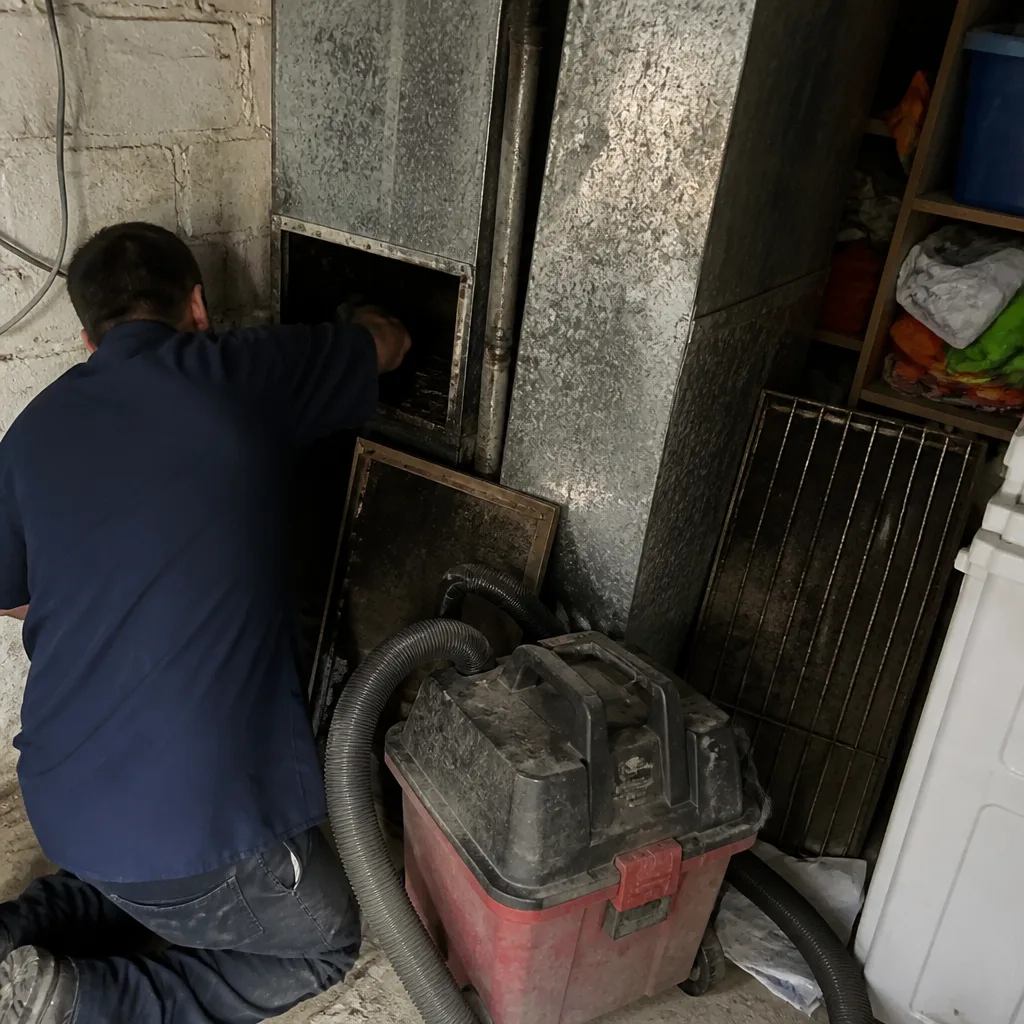 Before
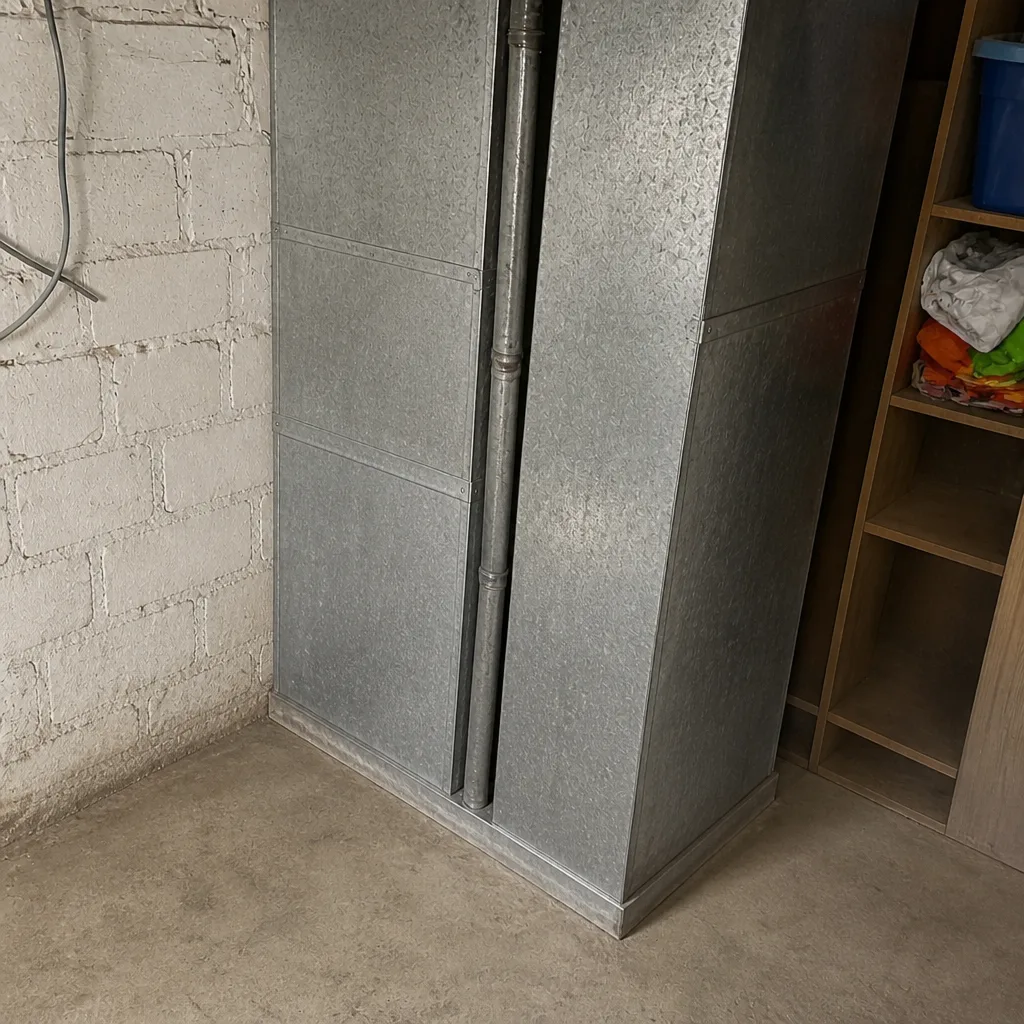 After
When to Call a Professional
Call a professional when you find visible debris or a musty odor at the registers, when a renovation has left construction dust in the system, when anyone in the household has allergies that seem to follow the air conditioning season, or when you’re buying a Pelham Bay home and want a system assessed before closing. Call when a dryer takes two cycles to finish a load – that’s an exhaust restriction, and it’s worth checking. And call before letting anyone cut into ductwork that hasn’t been documented; we’ll tell you what we see and whether it needs a licensed contractor and a DOB filing. Air Duct Cleaning Pelham Bay offers free estimates in Pelham Bay – call (877) 492-4238. We answer 24/7. Fast dispatch from 7am to 7pm, Sunday through Friday. One flat price per system, agreed before work starts, with before-and-after photos of your own ducts.
Frequently Asked Questions
No. Cleaning an existing, intact duct system in New York City does not require a permit from the Department of Buildings. A permit becomes relevant when the work alters the system – cutting new access panels, moving registers, replacing or reconfiguring duct runs. Call (877) 492-4238 for an exact scope and estimate – estimates are free.
Because a prior owner filed a permit for mechanical work at that address. The portal shows filed jobs, sign-offs, open permits, and violations tied to the property. Look it up before you close – an unresolved permit can hold up a sale. Call (877) 492-4238 if you’d like a walkthrough before you commit.
Pricing depends on the size of the system, the number of runs, access, and whether repair or sealing is needed, so it’s quoted per system rather than per vent. We give one flat price per system in writing before any work starts. Call (877) 492-4238 for an exact quote – estimates are free.
Usually because the quote covers less – fewer registers, consumer-grade vacuums instead of Rotobrush and Nikro HEPA equipment, or no sealing work once the cleaning is done. A low number that grows on-site is the pattern to avoid. We agree one flat price per system before work begins. Call (877) 492-4238 to compare scopes.
Ask for before-and-after photos taken inside your own ducts, plus a written assessment of what was found and removed. We take these on every job, and they’re your record when no permit exists. Call (877) 492-4238 to schedule.
Pre-1980 homes can have duct insulation or sealants that may contain asbestos, and disturbing that material falls under NYC DEP abatement notification rules. Testing and abatement are separate licensed specialties. A cleaning contractor’s job is to stop and flag it, which is what we do. Call (877) 492-4238 if you’re unsure about your home’s system.
The Bottom Line
In Pelham Bay, air duct cleaning is a maintenance service and does not require a permit. Duct modification does, and the line between them runs through access panels, register relocations, and trunk line changes. Check the DOB portal when you buy, test before disturbing pre-1980 insulation, and insist on documentation – before-and-after photos and a written assessment – for the work that needs no permit at all. If your building is multi-family, keep those records with your mechanical file. What you’re buying is a clean system and a record of it. Call (877) 492-4238 for a free estimate, or start with our air duct cleaning Pelham Bay service overview.
Written by the team at Air Duct Cleaning Pelham Bay.