
Last updated November 25, 2026
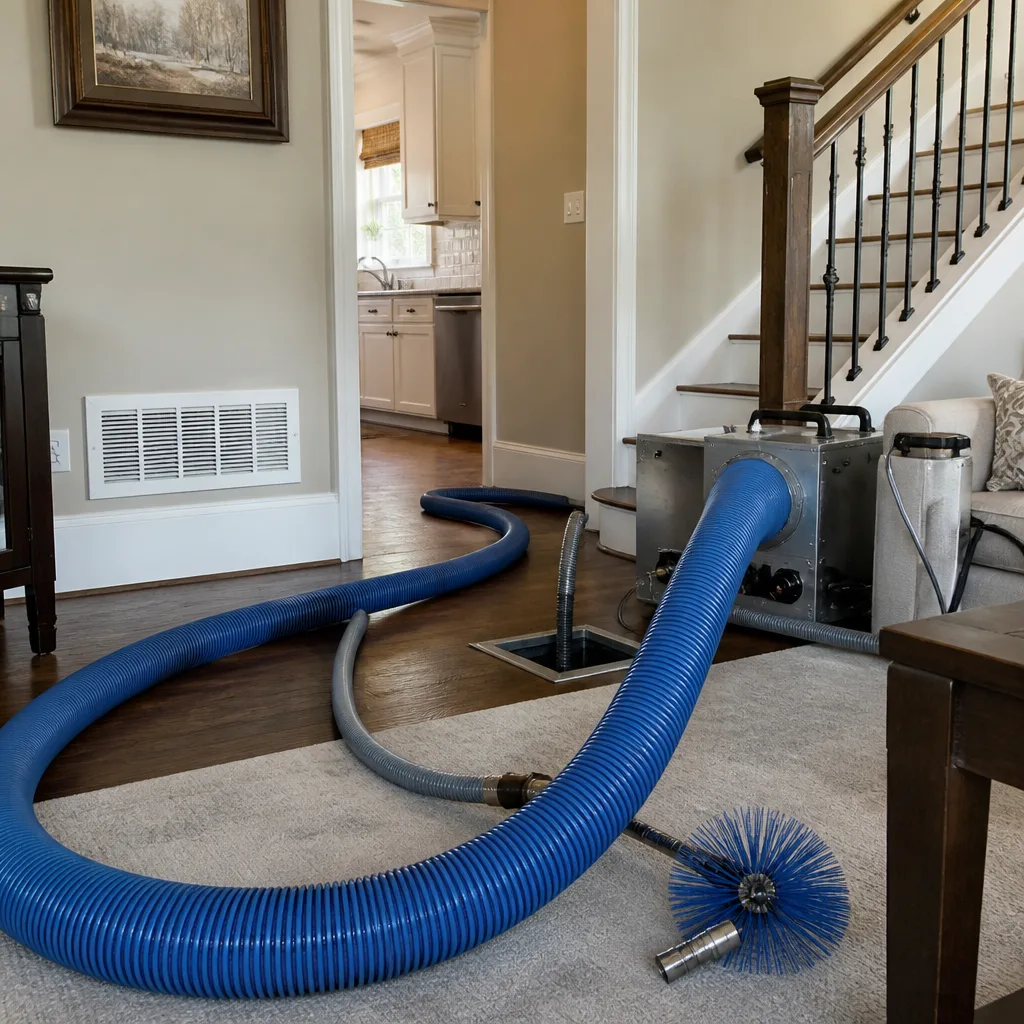 Whole-home duct cleaning
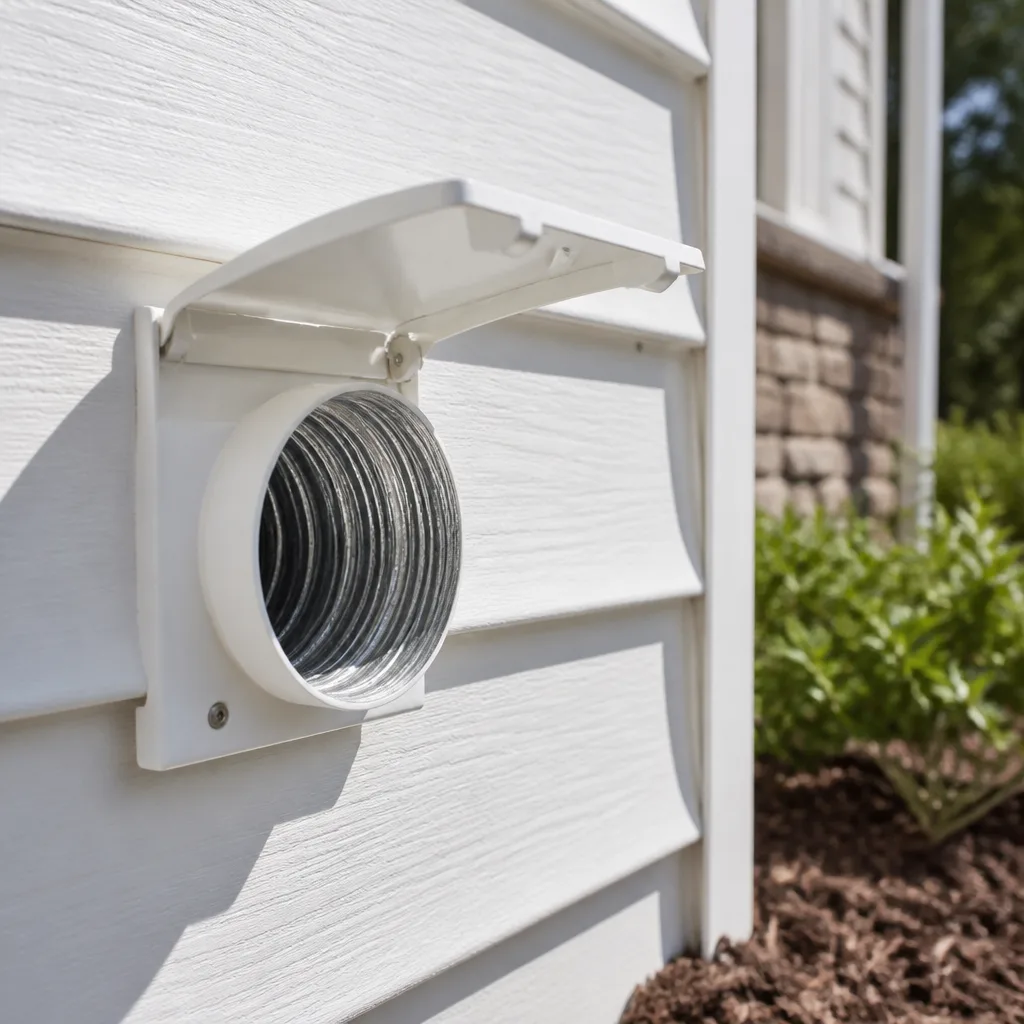 Dryer vent cleaning
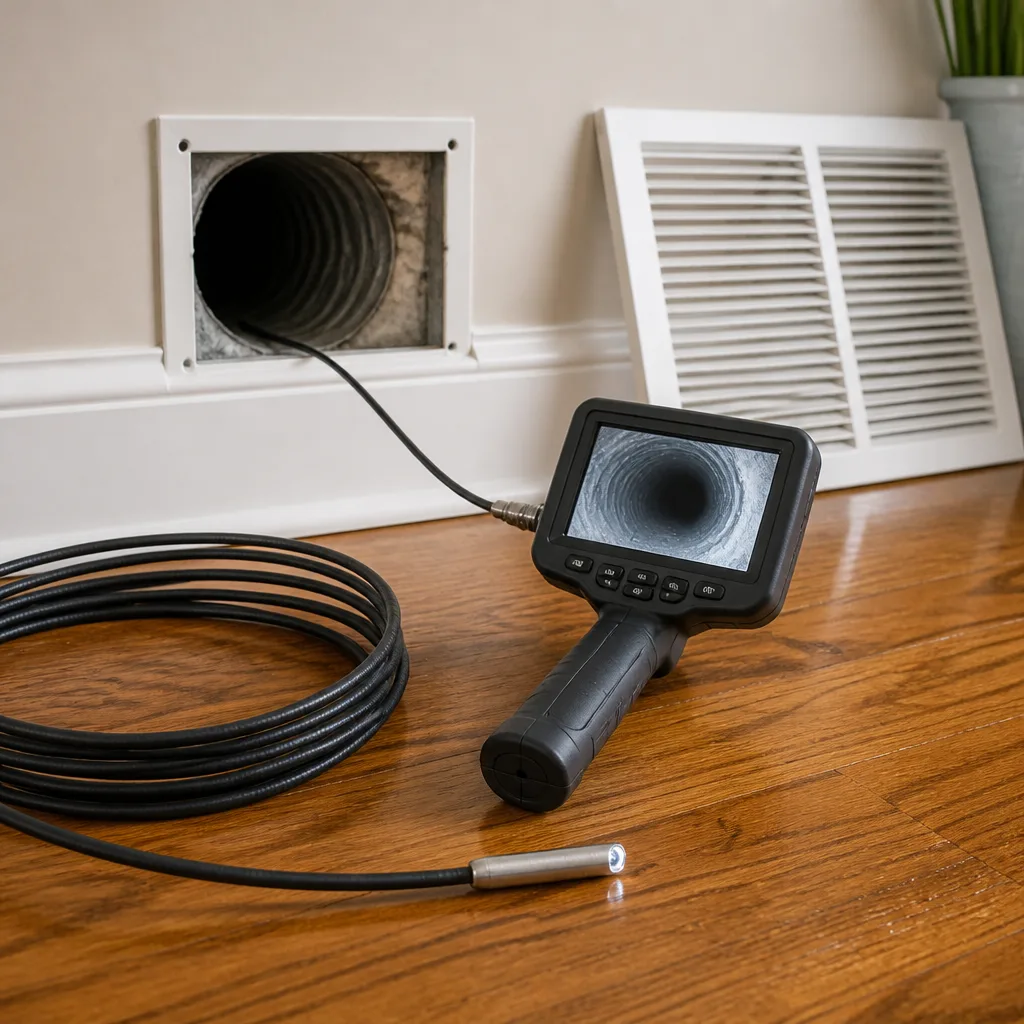 Camera inspection
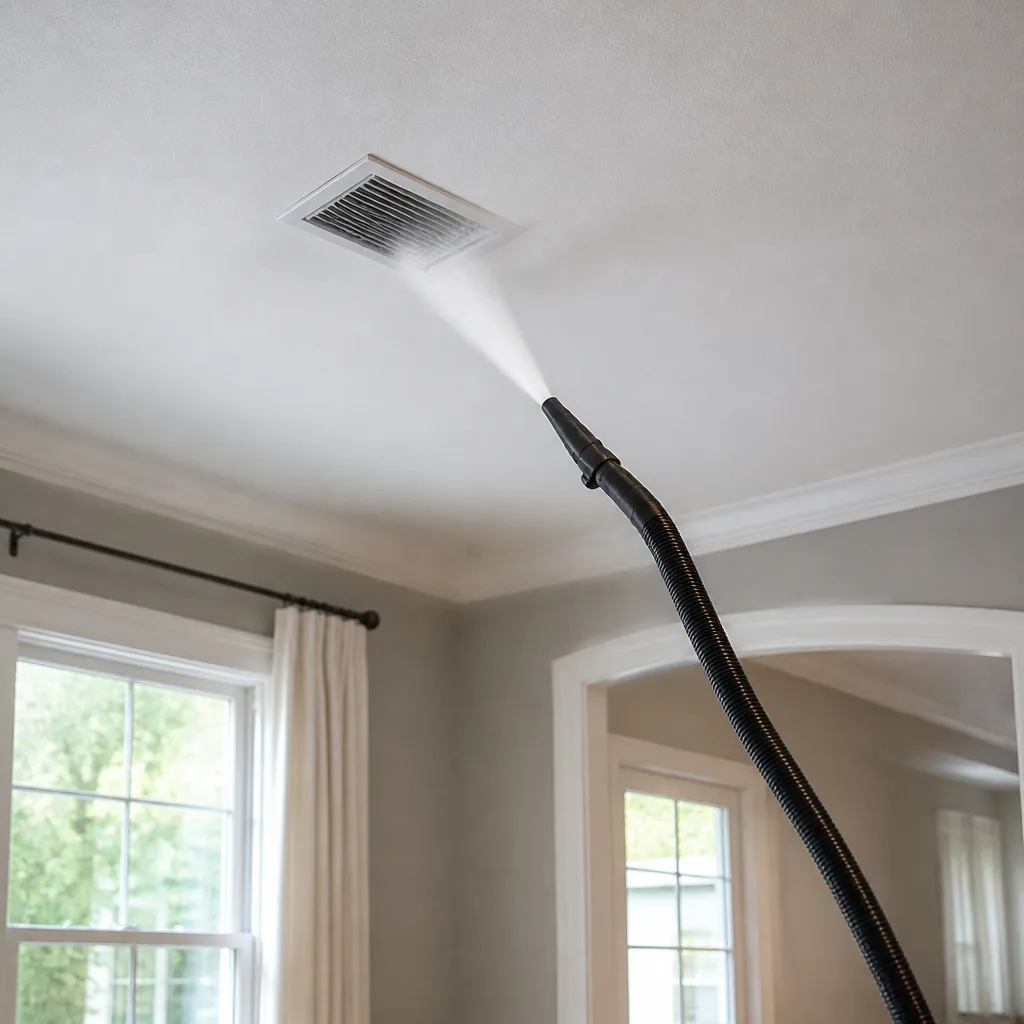 Sanitizing & deodorizing
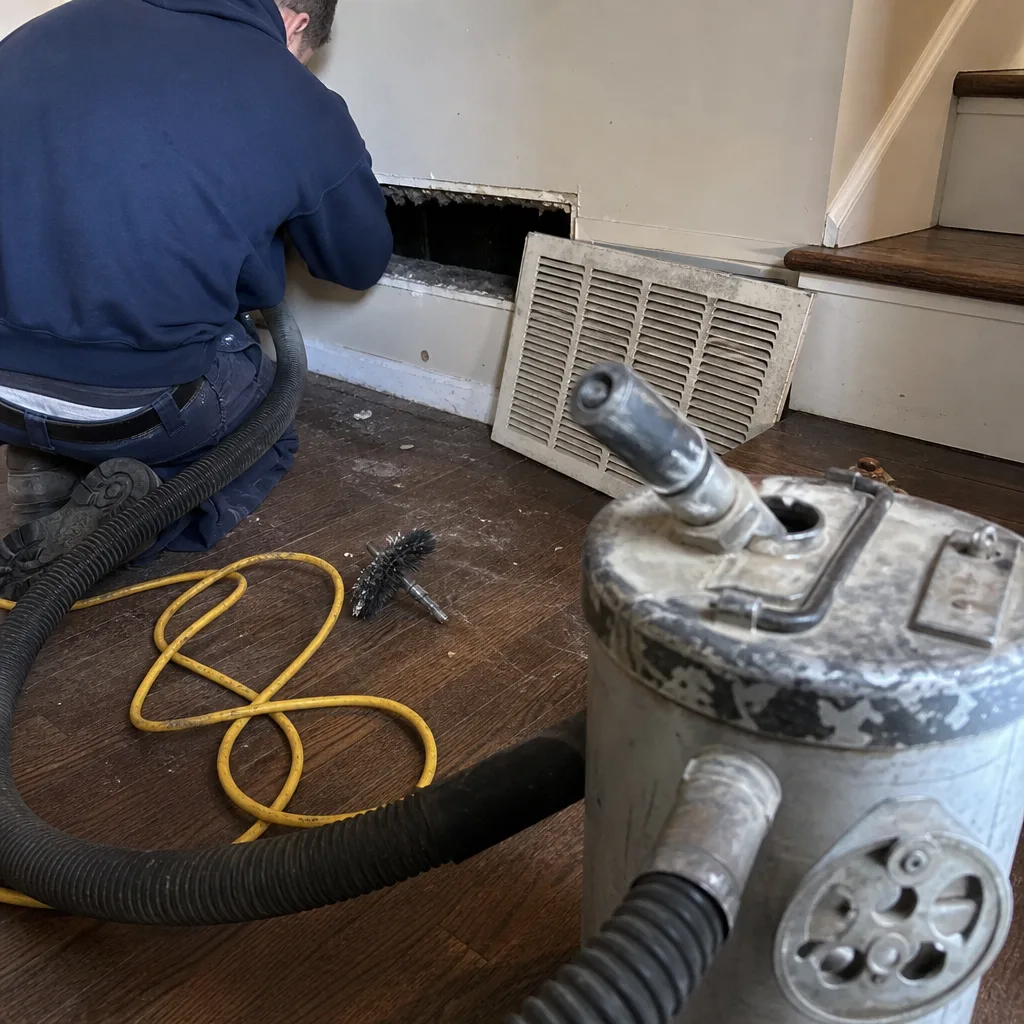
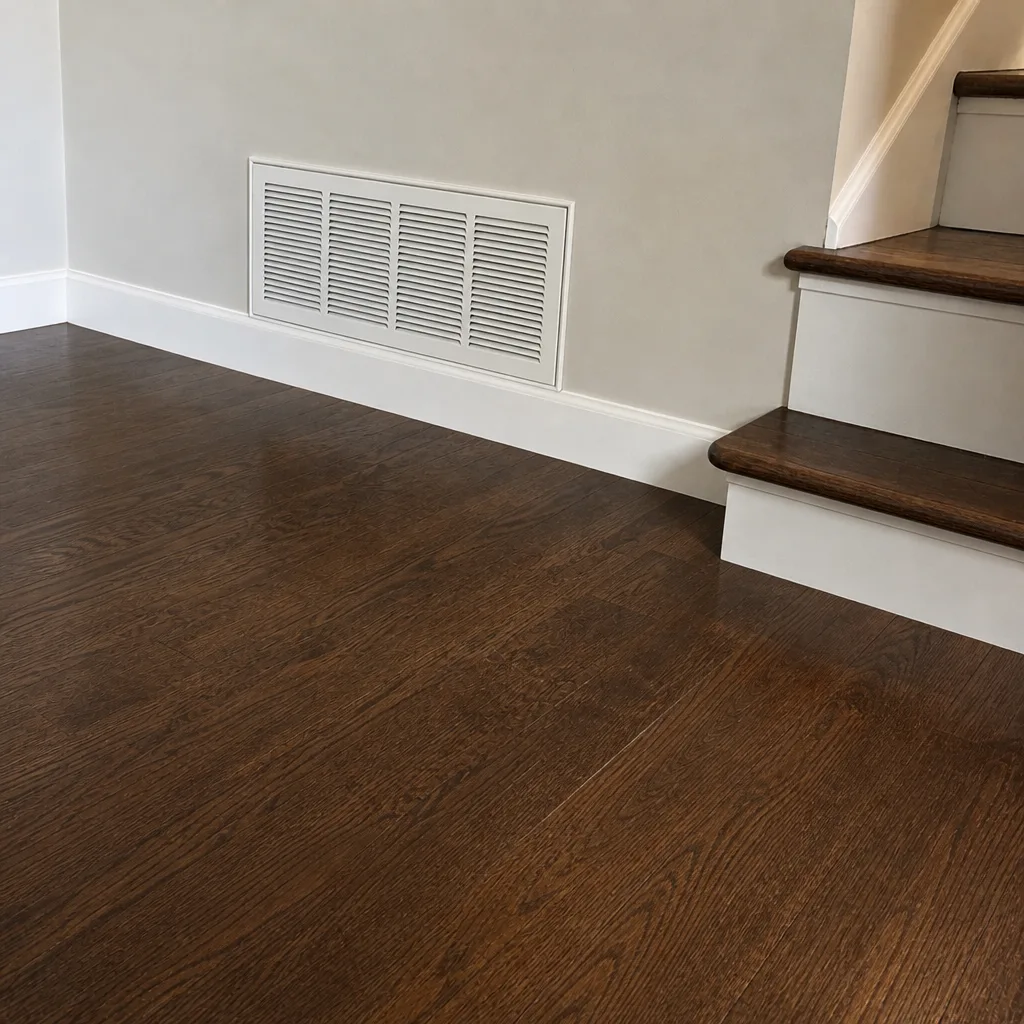
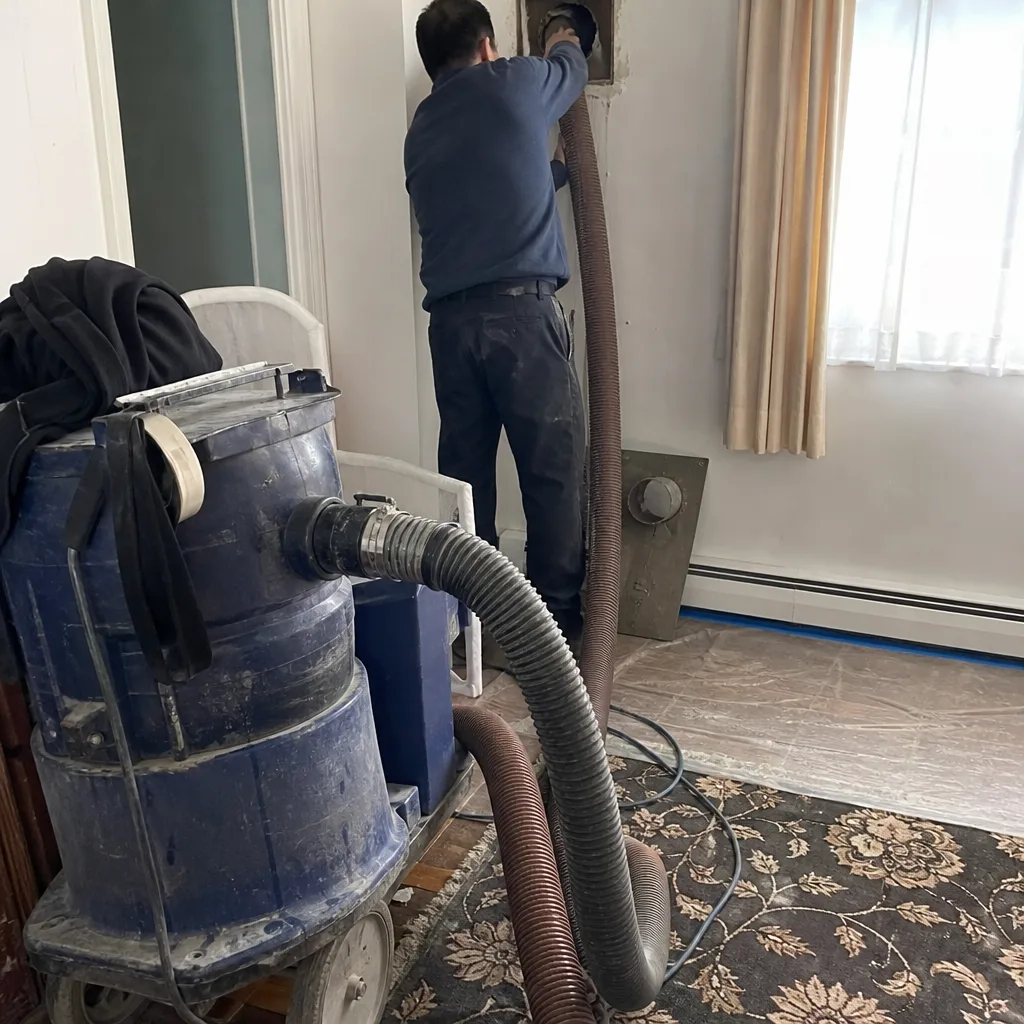
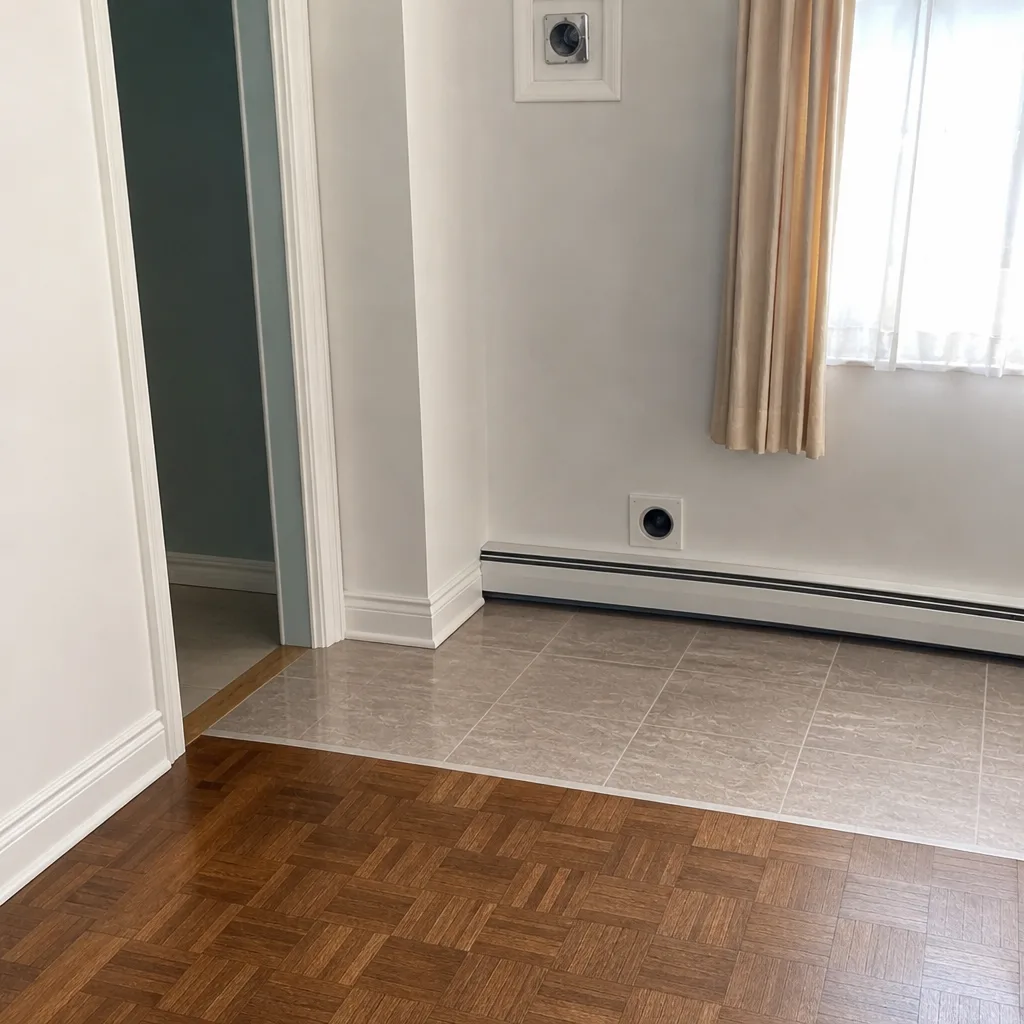
Whole-system duct and dryer vent check with before-and-after photos - you see exactly what came out of your vents
That "$99 whole-house special" is a bait ad - the real number appears once they are in your hallway, or the "clean" is a shop-vac at the register. We photograph the inside of your ducts before and after instead.
Air Duct Cleaning Cost Breakdown: The Pelham Bay Homeowner’s Reference for 2026
A $175 quote and a $650 quote for “air duct cleaning” in Pelham Bay can both be legitimate prices – for completely different jobs. The first may cover register vacuuming with a portable unit. The second may include full negative pressure source removal, coil cleaning, and blower service. Neither contractor is lying about price. They’re describing different scopes of work, and the homeowner comparing the two numbers side by side is usually comparing apples to a completely different category of fruit. This guide breaks down what each component of a genuine full-system cleaning actually costs in the Pelham Bay and Bronx market, so you can audit any quote against its real scope instead of guessing whether a number is fair.
Quick Answer
Air duct cleaning in Pelham Bay in 2026 typically costs between $300 and $700 for a standard single-family home with full source removal, and $600 to $1,200 or more when coil cleaning, blower service, and dryer vent cleaning are included in the same visit. The number you’re quoted tells you far less than the scope attached to it. A quote without a written line-item breakdown of registers, trunk lines, coil, blower, and returns isn’t a price – it’s an estimate of an unnamed job.
Styles & brands we work with
- Whole-home duct cleaning
- Dryer vent cleaning
- Camera inspection
- Sanitizing & deodorizing
Table of Contents
- Why Pelham Bay Duct Cleaning Quotes Vary by a Factor of Four
- Line-Item Cost Breakdown: What Each Component Actually Costs
- How Home Size, Story Count, and Vent Count Change the Price
- Add-On Services and Where Upsell Pressure Is Highest
- Solo Operator vs. Multi-Truck Company: What the Price Difference Really Reflects
- Red-Line Pricing Signals That Should Make You Walk Away
- Why Equipment Grade Is the Hidden Variable in Every Quote
- How to Compare Three Quotes in Fifteen Minutes
Why Pelham Bay Duct Cleaning Quotes Vary by a Factor of Four
The reason two Pelham Bay homeowners on the same block can get quotes that differ by $500 isn’t a rigged market. It’s that “air duct cleaning” is a term with no agreed definition. One contractor may quote a light surface cleaning of the registers and the accessible ductwork near the main trunk. Another may quote full source removal: sealing every register, pulling the entire system under negative pressure with a HEPA-rated vacuum, agitating the duct walls with a rotary contact-cleaning tool, then cleaning the evaporator coil and blower wheel while the system is open.
The first job takes under an hour with a shop vacuum and some brushes. The second takes three to five hours with contractor-grade equipment. They are not the same service, and they do not carry the same price.
Here’s the part that trips most homeowners up in Pelham Bay: the low-priced quote is not always from a scammer, and the high-priced quote is not always from a company doing more work. The number itself is meaningless without three things attached to it in writing:
- The number of registers and returns being cleaned – not a per-vent rate, but a stated total count
- Whether the evaporator coil and blower are included – these are the two components that drive most indoor-air complaints
- The type of vacuum and agitation method – a HEPA-rated negative pressure setup and a rotary contact tool are the baseline for source removal; a portable shop vac is not
The Pelham Bay housing stock adds another layer. Many of the homes here are pre-war or mid-century construction with forced-air systems that have been modified, extended, or partially replaced over decades. A system that started as a simple bungalow layout may now have added runs, flex duct sections spliced in, and returns that don’t match the original design. That variation is real, and it’s why pricing by square footage alone is unreliable – a 1,400 square-foot Pelham Bay colonial with a converted basement and added returns can cost more to clean than a 2,200 square-foot newer home with a clean, uniform layout.
If you want to understand the fundamental service before comparing prices, our air duct cleaning Pelham Bay page lays out the full process. Read that first, then come back to the numbers.
Line-Item Cost Breakdown: What Each Component Actually Costs
A full-system cleaning isn’t one job – it’s five or six separate tasks with different time and equipment requirements. When a contractor quotes you a single number, they’re bundling these. When you audit a quote, you want to see each of these broken out, because that’s how you spot which items are included and which are being sold as add-ons later.
The ranges below reflect the Pelham Bay and Bronx market in 2026 for a typical single-family home. They are estimates, not menu prices – the written estimate sets the final price for your specific system.
- Supply and return register cleaning: $8 to $18 per register, typically bundled. A 1,800 square-foot Pelham Bay home usually has 12 to 20 supply registers and 3 to 6 returns. A contractor quoting “$99 whole house” is either omitting registers or charging per-vent on top.
- Trunk line and branch duct cleaning: $180 to $320 for the main trunk and branch runs, including agitation and negative pressure vacuum. This is the core of the job.
- Evaporator coil cleaning: $120 to $220. The coil is where condensation forms and where mold and biofilm accumulate. Skipping it while cleaning the ducts is like vacuuming a room without emptying the vacuum bag.
- Blower wheel and motor compartment cleaning: $80 to $160. The blower wheel picks up fine dust and becomes a distribution source for everything the ducts don’t catch.
- Dryer vent cleaning (if bundled): $100 to $180. Legitimate as a same-visit add-on if the dryer vent routing allows it. Our dryer vent cleaning page covers what a proper vent cleaning involves – it’s not the same as duct cleaning and shouldn’t be priced as one.
- Duct repair and sealing (if needed): $200 to $600 depending on the number of joints, disconnected runs, and whether flex duct has to be replaced. This is the item most likely to surface mid-job, which is why a thorough pre-inspection matters.
Total those ranges for a typical Pelham Bay three-bedroom with a basement system and you land somewhere between $550 and $950 for a complete job with coil and blower included. That’s the honest range. A quote significantly below it is a lighter scope. A quote significantly above it needs a scope justification – not an upsell pitch.
HVAC cleaning as a distinct service is also worth understanding on its own terms, and our HVAC cleaning page explains how the coil, blower, and cabinet cleaning integrate with the ductwork. Forced-air systems are a single connected ecosystem – cleaning one component while leaving the others contaminated makes little sense.
How Home Size, Story Count, and Vent Count Change the Price
Home size matters, but not the way most homeowners assume. A contractor pricing purely by square footage is taking a shortcut that almost always produces a bad estimate in Pelham Bay, where housing stock varies so widely in layout and system condition.
The variables that actually move the number:
- Number of supply registers and returns. This is the single biggest driver. Each register has to be removed, sealed, cleaned, and re-sealed. Ten registers and twenty registers are entirely different working times. Count them yourself before you call – it takes five minutes and instantly makes every quote easier to evaluate.
- Story count. A two-story Pelham Bay home typically has a trunk line that splits or reduces to feed the upper floor. That split point, plus the additional branch runs, adds cleaning time. A third-floor attic conversion with a separate mini-system or added zone can nearly double the ductwork scope on a home that seems modest from the street.
- System age and condition. Ductwork installed before the 1980s may use materials with different cleaning requirements. Older flex duct with torn interior lining has to be replaced rather than cleaned. Any contractor who quotes without inspecting the accessible ductwork first is quoting blind.
- Access. A basement or crawlspace system with full access cleans faster than a system with ducts sealed behind drywall soffits. In a crowded Pelham Bay row house, access can add hours of labor and $100 to $250 to the total.
- Contamination level. Post-renovation drywall dust, visible mold growth, pest debris, or heavy buildup each require more thorough treatment and may push toward sanitizing plus HEPA remediation rather than a standard clean.
Square footage correlates with vent count, but weakly. A 1,200 square-foot home with a fixed-up basement and added returns might have more registers than a 2,000 square-foot home with a simple two-zone layout. When you call, count your registers and returns and state them. It’ll get you a more accurate estimate the first time. If you want a walkthrough of the inspection process, air duct cleaning covers how a proper pre-job assessment should work.
Add-On Services and Where Upsell Pressure Is Highest
Two add-ons account for most of the friction between homeowners and duct cleaning contractors: antimicrobial treatments and UV light installation. Both can be legitimate. Both are routinely sold to homeowners who don’t need them. Here’s how to tell the difference.
Antimicrobial Fogging
A chemical fog applied to the duct interior after cleaning. It costs $80 to $200 as an add-on. It’s warranted when there’s visible biological growth – mold, mildew, or the musty smell that indicates spore activity. It’s not warranted as a routine “safety” measure on a duct system that’s already been cleaned. If your contractor recommends it before inspecting the ducts, that’s an upsell call, not a finding-based recommendation. Ask to see the photographic evidence before approving it, and ask whether a plain contact cleaner plus HEPA vacuuming already removed the contamination.
UV Light Installation
A UV-C lamp installed at the evaporator coil costs $300 to $600 installed. It has a defensible use case: a coil that has shown chronic biological growth despite cleaning, typically where a basement system runs humid. It’s oversold in homes without that history. UV in a duct system without an established growth problem is a $400 remedy for a problem that doesn’t exist. Our Air Quality & Sanitizing service uses Honeywell and Aprilaire product lines for cases where a sanitizing step or filtration upgrade makes sense – but the word “makes sense” has to be tied to a finding, not a default recommendation.
Duct Sealing
This is where the upsell pressure is lowest and the value is highest. Sealing costs $200 to $600 depending on scope and should be based on actual findings – visible joint gaps, disconnected runs, or evidence of leakage at returns. Duct Repair & Sealing is the one add-on where spending more upfront often prevents repeat cleaning later, because sealing removes the pathways that reintroduce dust and contaminants. In older Pelham Bay homes with decades-old sheet metal and spliced flex runs, this is the piece most likely to be genuinely needed. Ask to see the gaps. A contractor who can’t show them shouldn’t be selling the repair.
Solo Operator vs. Multi-Truck Company: What the Price Difference Really Reflects
A solo operator charging $250 for a job that a multi-truck company quotes at $650 sounds like a bargain. Sometimes it is. Sometimes the $250 operator has a portable shop vac, a brush kit, and no HEPA filtration. The price difference isn’t a mark-up – it’s the cost of the equipment setting the scope.
What a fair solo operator actually looks like:
- Owns a professional-grade rotary contact tool and a HEPA-rated negative pressure unit (a Rotobrush or Nikro setup, not a consumer shop vac with a filter bag taped on)
- Carries before-and-after photo documentation
- Quotes by written line item, not by “$99 per vent”
- Limits their own job scope honestly when the truth is that they don’t have the equipment for a particular level of contamination
What a fair multi-truck company looks like:
- Carries the same professional equipment, plus sufficient vacuum capacity to keep a whole system under negative pressure
- Can bundle duct cleaning, coil cleaning, blower service, dryer vent, and sanitizing in a single visit without subcontracting
- Prices higher because the labor overhead, insurance, and equipment capacity are real costs – not because the job is being padded
The vertical that separates the two is worth understanding before choosing. A solo operator with the right tooling can do an excellent job on a straightforward single-system home. Complex jobs – heavy contamination, multi-story systems, post-renovation debris, or a system that needs coil and blower service at the same time – often exceed a single-technician setup. That’s a capacity difference, not a quality difference, and a good solo operator will tell you when their setup is outmatched. Ask the question directly: “what equipment do you use, and is it HEPA-rated?” The answer tells you most of what you need to know about which tier of service you’re being quoted.
Our technicians have up to 14 years of experience, and we use Rotobrush and Nikro systems for contact cleaning and HEPA vacuuming, with Abatement Technologies tools for contaminant-heavy jobs. That’s the reference point we’d use to evaluate any quote you’re weighing – ours or anyone else’s.
Red-Line Pricing Signals That Should Make You Walk Away
Most pricing frustration in this industry comes from two structural patterns, and both are recognizable before the technician arrives. Watch for these:
- A job minimum that suggests the equipment can’t support the work. If the quoted price is $150 to $200 flat for a full house and the contractor can’t list which components are included, the price reflects an under-equipped scope. A HEPA-rated vacuum large enough to hold a small forced-air system under negative pressure costs real money to run for an hour. A price that doesn’t reflect that isn’t a discount – it’s a scope you didn’t ask for.
- Unusually high per-vent pricing. $40 to $60 per register sounds reasonable at the front of the conversation and inflates past $900 for a typical 18-register Pelham Bay home. Legitimate contractors price by system, not by vent. A per-vent quote is a way to make a high total feel granular and defensible.
- A “low” coupon price that becomes a larger invoice on site. The classic pattern: $99 advertised, then $800 quoted on arrival once contamination is “revealed.” Real contamination happens, but it should be photographed and explained before work starts, and the invoice should match the estimate. If the on-site quote is four times the coupon, the coupon was bait.
- No written estimate before work starts. A legitimate contractor will inspect first and hand you a written scope with the price attached. If the price is only quoted verbally, you have no leverage if it changes.
- No photo documentation offered. Before-and-after photos of your own ducts are the single verification step that separates a real cleaning from a cosmetic one. Ask upfront whether you’ll receive them. If the answer is vague, treat the price as unverified.
- Add-on recommendations made before the ducts are inspected. If you’re told you “definitely need” sanitizing or a UV lamp within the first five minutes of the call, the recommendation isn’t based on your system. It’s based on a sales script.
The bottom line on red flags: it’s not the price itself that should trigger a walk-away. It’s the absence of a scope that justifies the price. If a contractor can explain the line items, the equipment, and the photographic documentation without hesitation, the price is either fair or clearly explained. If not, keep calling. Free estimates exist for exactly this reason – use several of them.
Why Equipment Grade Is the Hidden Variable in Every Quote
The line-item cost breakdown only makes sense if you know which equipment is doing the work. Different setups produce different results at the same price point, and the difference is invisible on an invoice. Here’s the equipment landscape you should be able to map against any quote you receive.
Consumer-grade setup
Shop vac and brush kit. Adequate for light surface dust near the registers. Ineffective at removing settled contamination along trunk lines and branch runs. Rough operating range: $150 to $250 for the whole house.
Professional contact-cleaning setup
Rotary brush contact cleaner plus a HEPA-rated vacuum. Agitates the duct wall while the vacuum captures the loosened material. This is the baseline for a genuine cleaning. Rough operating range: $400 to $800 for the whole house.
Full negative-pressure source-removal setup
Whole-system negative pressure maintained during agitation, with HEPA filtration capturing fine particulates. The scope typically includes coil, blower, and dryer vent in a single visit, plus sanitizing where findings warrant it. Rough operating range: $700 to $1,300 or more depending on home complexity.
What moves a quote from one tier to the next:
- Whether the vacuum is HEPA-rated and sized to keep the whole system under negative pressure, not just the immediate work area. Our jobs use Nikro HEPA-rated equipment for this reason – fine dust that escapes into the living space defeats the purpose.
- Whether the agitation method is a rotary contact tool (Rotobrush-style) or a manual brush. Rotary contact cleaning is significantly more thorough on established dust and biofilm.
- Whether contaminants beyond dust are present. Mold spores, pest debris, and post-renovation particulate require Abatement Technologies-grade equipment to remove safely.
- Whether the job includes post-cleaning sanitizing via product lines like Honeywell or Aprilaire, and whether Guardsman-grade protective treatments are applied.
If a quote doesn’t say which tier it’s in, ask the contractor directly: “what vacuum are you using, what agitation tool, and is the whole system held under negative pressure during the work?” Those three questions will reveal the real scope behind any number.
How to Compare Three Quotes in Fifteen Minutes
Most homeowners comparing duct cleaning quotes spend hours on the phone and end up with three numbers they can’t rank. Here’s a shortcut method that puts any quote to a fair test.
- Write down your register and return count first. Walk the house and count. This is the baseline every quote has to be judged against.
- Ask every contractor the same five questions in the same order: (1) what equipment will you use, (2) how many registers and returns does your quote cover, (3) is coil cleaning included, (4) is blower cleaning included, (5) will you send before-and-after photos of my own ducts?
- Note the surprise factor in each answer. A contractor who answers all five clearly and without hesitation is either scoping honestly or overselling confidently – either way, you can now audit the price against the scope. A contractor who dodges any of the five is hiding something about the price.
- Stack the quotes side by side with the scope attached. A $380 quote with coil, blower, and returns included may be a better deal than a $320 quote with coil cleaned separately at $180. You can’t tell without the scope attached.
- Look for the written estimate. Any contractor worth booking will hand you a scope and price in writing before work starts. If the final number isn’t in that document, walk.
- Confirm the flat price. The strongest anti-upsell lever is a single flat price per system, agreed in writing, with no per-vent charges and no surprise add-ons on the invoice. Insist on it.
The 15-minute version of this is: two quotes with the same scope, one flat price each, before-and-after photos promised, and the equipment named on the invoice. Those four things are the entire decision framework. Everything else is noise.
Common Mistakes to Avoid
- Comparing prices without comparing scopes. A $175 quote and a $650 quote may both be legitimate and cover completely different work. Put the scope next to the price before you decide.
- Assuming square footage is the pricing metric. In Pelham Bay’s varied housing stock, register count and system layout matter far more than the listing square footage. Count your vents, not your rooms.
- Accepting a per-vent quote. Per-vent pricing is the mechanism most often used to make a high total feel reasonable. Ask for a flat, whole-system price instead, and confirm what’s included in it.
- Approve add-ons before the ducts are inspected. Antimicrobial treatments and UV lamps have real use cases. They’re not routine. Approve them only after seeing what’s actually there.
- Skip the coil and blower. Cleaning ducts while leaving a contaminated coil and blower wheel in place leaves the main distribution source for future dust untouched. Confirm both are included in the scope.
- Book on price alone without asking about equipment. A HEPA-rated vacuum and a rotary contact cleaner are the minimum for real cleaning. A quote that can’t name its equipment can’t guarantee the outcome.
- Accept a quote without photo documentation. Before-and-after photos of your own ducts are the verification step. If a contractor won’t offer them, you have no way to know what was done after they leave.
See the difference
 Before
 After
 Before
 After
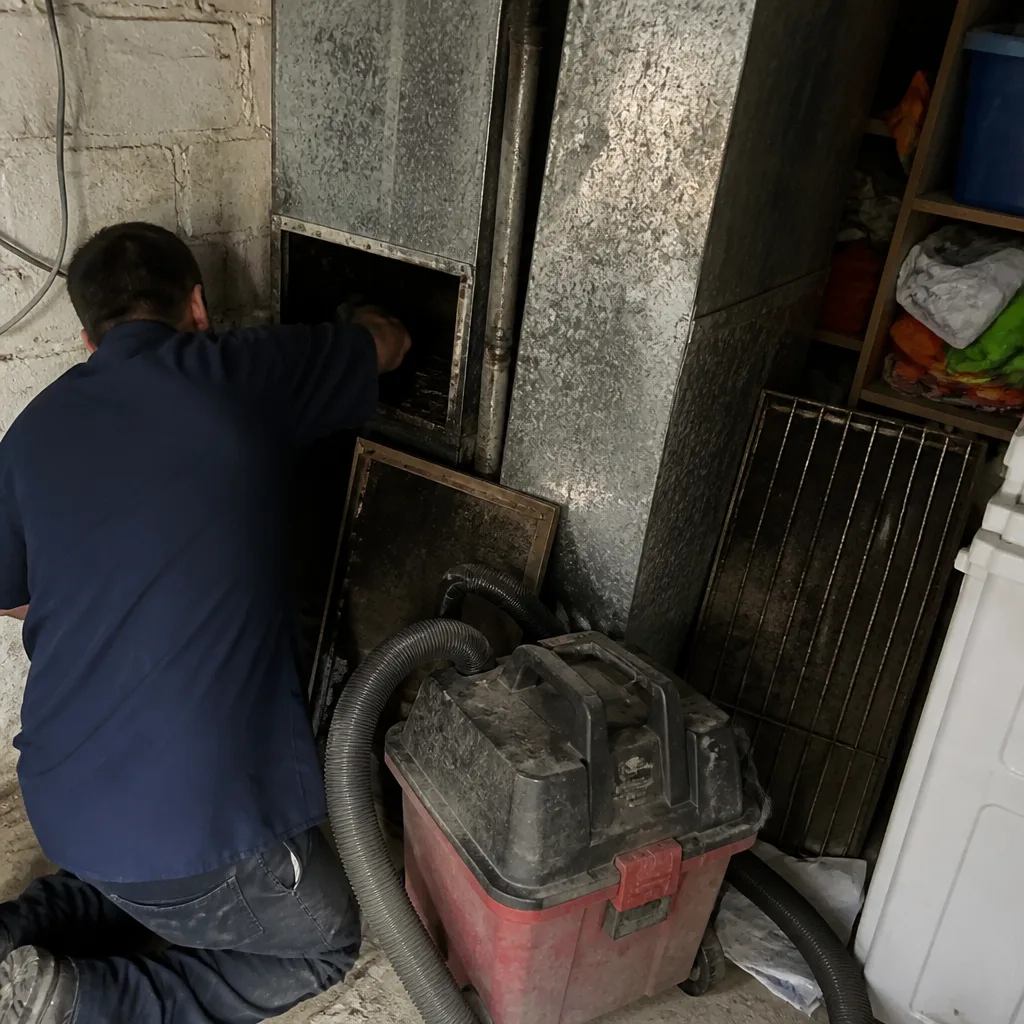 Before
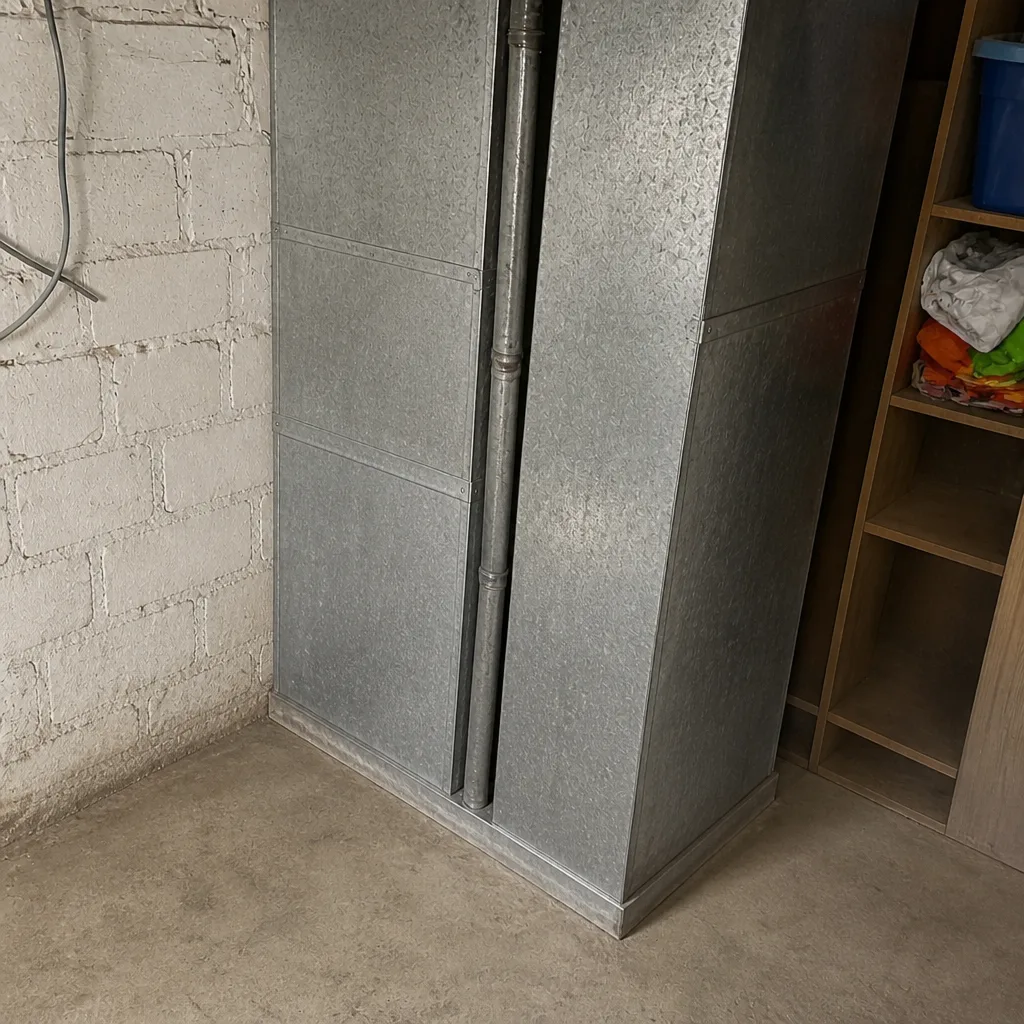 After
When to Call a Professional
Some duct conditions are cosmetic and can wait. Others are actively compromising your indoor air, and waiting makes them worse. Call a professional if you’ve noticed visible dust accumulating on registers and furniture far faster than it used to, if a musty or stale smell drifts from the vents when the system runs, if there’s persistent allergy-like irritation in the household with no other explanation, or if you’ve recently finished a renovation that generated drywall dust that may have migrated into the system. Call immediately if you see visible mold growth inside a register or on the evaporator coil, if there’s pest debris in the ductwork, or if the system has a persistent “dust cloud” effect when the blower kicks on. If you’re unsure whether your situation warrants a full cleaning or a lighter service, the equipment assessment during a free estimate will tell you. Air Duct Cleaning Pelham Bay offers free estimates in Pelham Bay – call (877) 492-4238. We answer 24/7. Fast dispatch from 7am to 7pm, Sunday through Friday.
Frequently Asked Questions
A full-system air duct cleaning in Pelham Bay typically runs $300 to $700 for a standard single-family home, and $600 to $1,200 or more when coil cleaning, blower service, and dryer vent cleaning are bundled in. The exact number depends on your register count, system layout, and contamination level. Call (877) 492-4238 for an exact quote – estimates are free.
Cheaper quotes usually reflect a lighter scope – surface vacuuming near the registers with consumer-grade equipment rather than full source removal under negative pressure. The low price is real; it just covers a different job. Ask specifically what equipment is being used and whether coil and blower cleaning are included, and the scope difference will be clear. Call (877) 492-4238 if you want a side-by-side audit of a quote you’ve received – estimates are free.
Before-and-after photos of your own ducts are the verification. Ask for them upfront, then compare them against the specific areas that were cleaned – the coil, the blower area, at least a couple of trunk sections, and a few registers. A contractor who can’t produce documentation shouldn’t be booked. Call (877) 492-4238 for an estimate that includes a photo-documentation scope – estimates are free.
Most homes need it every three to five years, and some never need it. The frequency depends on whether the system is introducing new contamination – visible dust accumulation, pets, recent renovations, allergy symptoms, or a musty smell. If none of those are present, a cleaning recommendation should be based on an inspection rather than a schedule. Call (877) 492-4238 for a free inspection and estimate.
Yes, in some cases. Pelham Bay has a mix of pre-war and mid-century homes where ductwork has been modified, extended, or partially replaced. Older systems with more complex routing, added returns, or sealed-behind-drywall access can add $100 to $300 to the total compared to a simpler layout. Confirm the quote accounts for your actual layout before booking. Call (877) 492-4238 for a free estimate.
Often yes. Bundling dryer vent cleaning with air duct cleaning usually saves $50 to $100 versus booking them separately, since the equipment and setup are already on site. Confirm the dryer vent is on a routed path the technician can service in the same visit. Call (877) 492-4238 for a combined estimate – estimates are free.
The Bottom Line
Pelham Bay duct cleaning prices vary by a factor of four because contractors are quoting completely different scopes. A $175 quote isn’t necessarily a scam, and a $650 quote isn’t necessarily fair – the price only means something when it’s attached to a written line-item scope that names the registers, trunk lines, coil, blower, and dryer vent as included or excluded, and specifies the equipment doing the work. The four things to demand in any quote: a flat price per system, no per-vent charges, a written scope with each component listed, and before-and-after photos of your own ducts. If a contractor can’t deliver all four, keep calling. If they can, the price is auditable and the decision is yours to make with confidence.
To book a free estimate in Pelham Bay, call (877) 492-4238. We answer 24/7. Fast dispatch from 7am to 7pm, Sunday through Friday. One flat price per system, agreed before work starts, with before-and-after photos of your own ducts provided at the end.
Written by the team at Air Duct Cleaning Pelham Bay.