
Last updated November 25, 2026
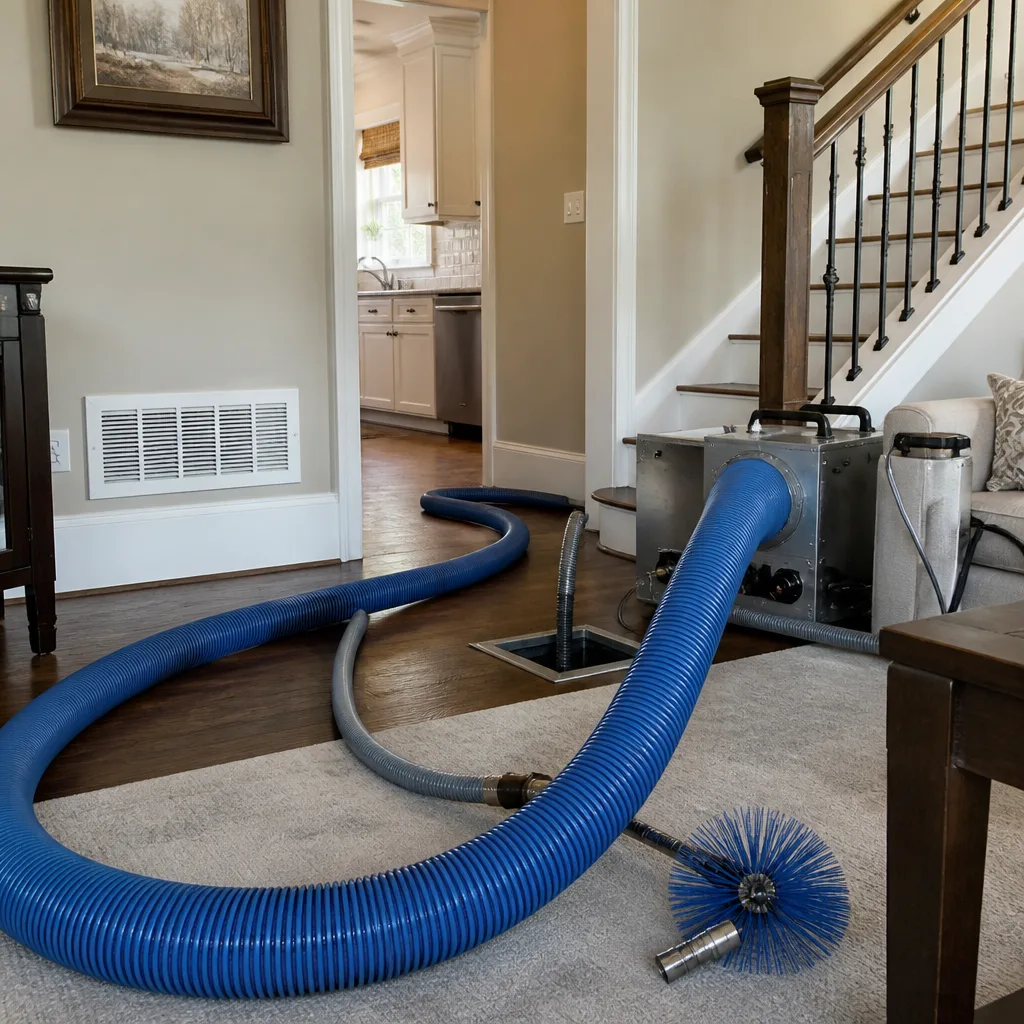 Whole-home duct cleaning
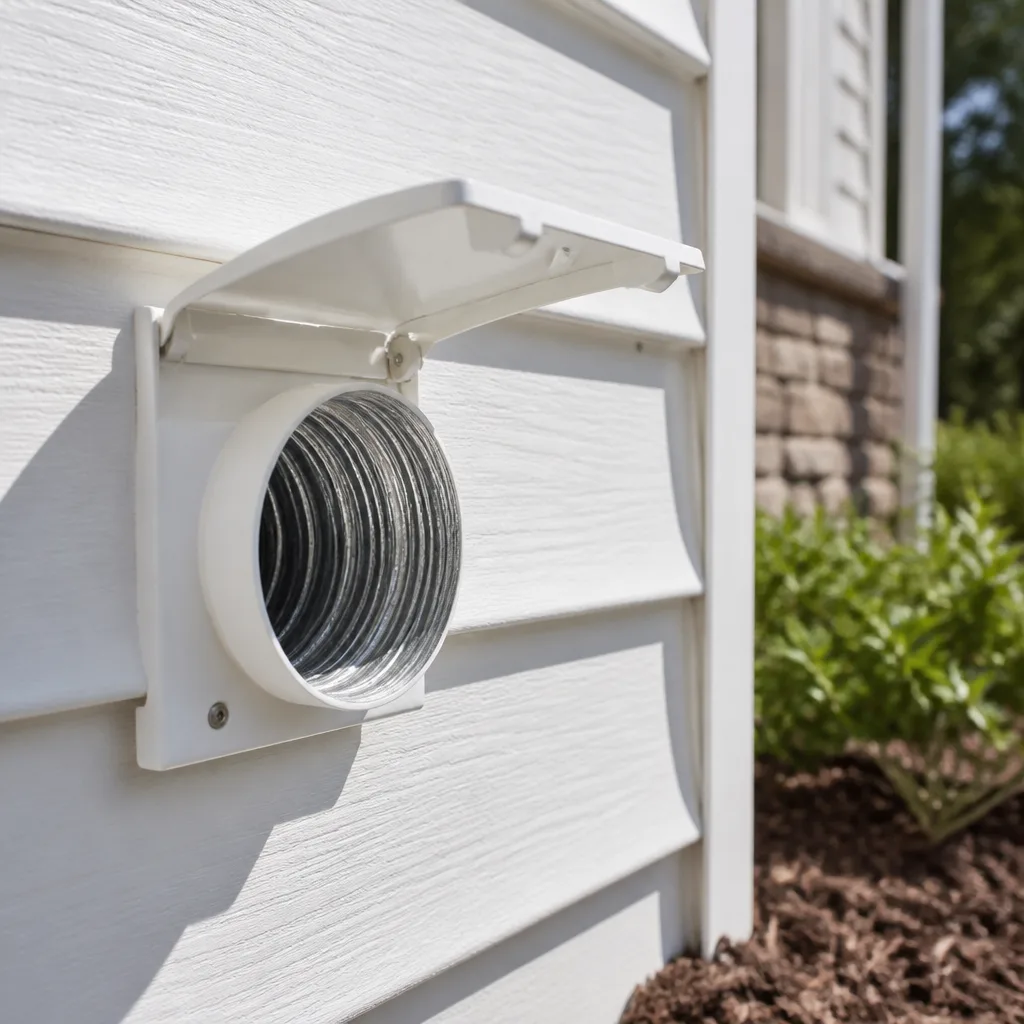 Dryer vent cleaning
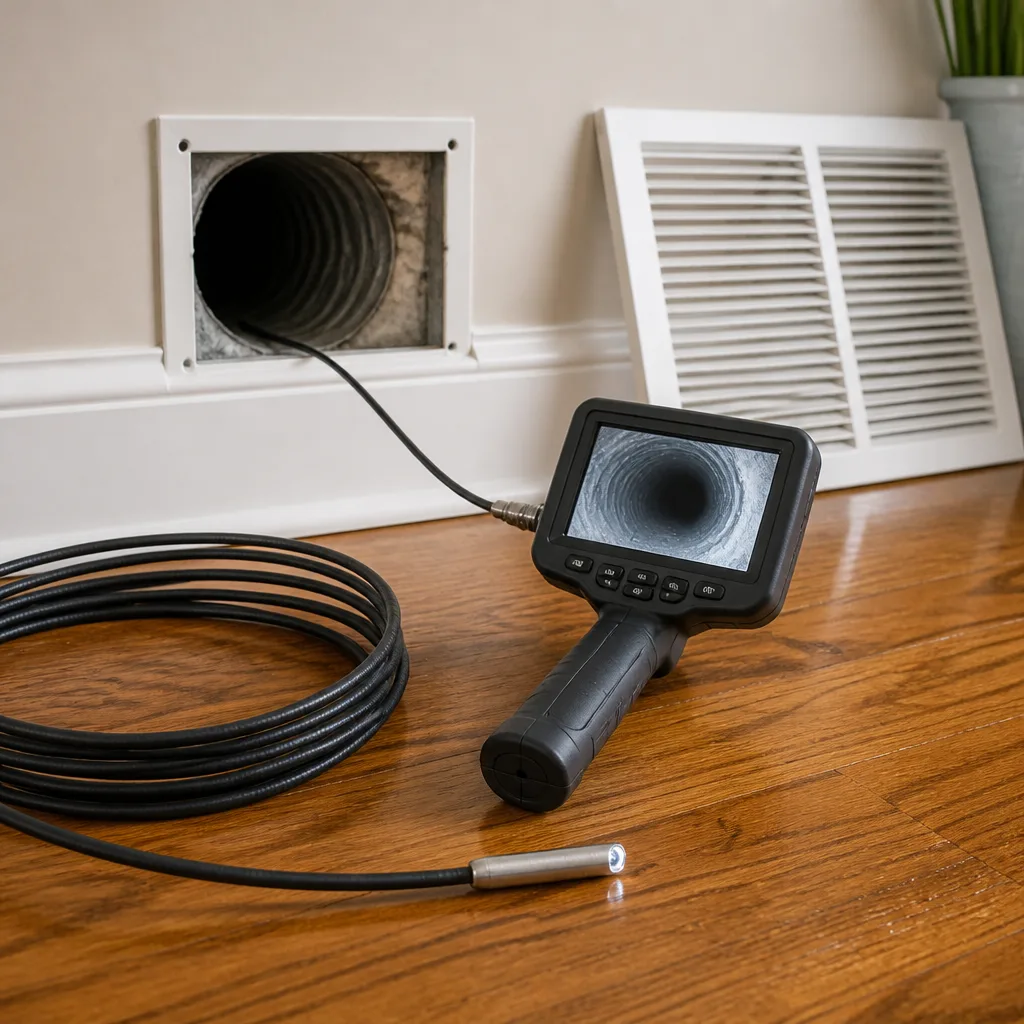 Camera inspection
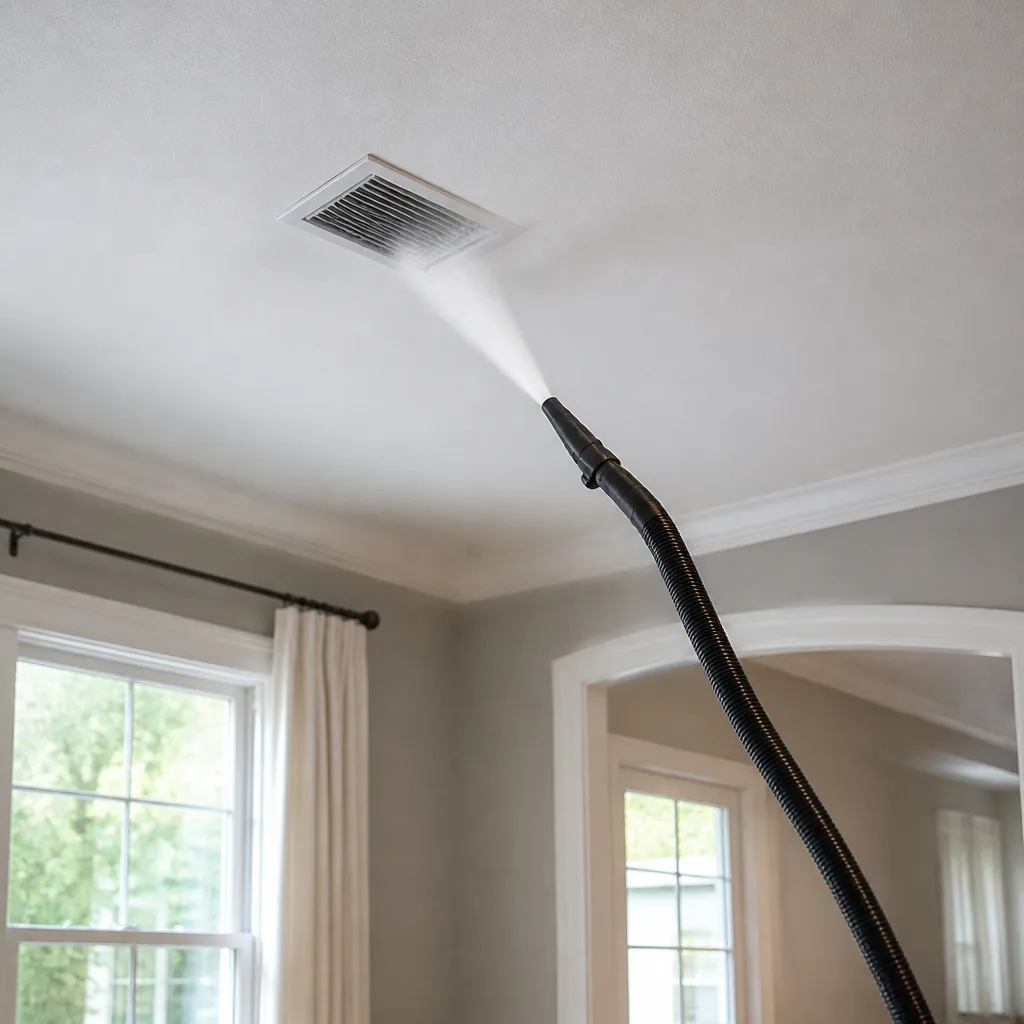 Sanitizing & deodorizing
Whole-system duct and dryer vent check with before-and-after photos - you see exactly what came out of your vents
That "$99 whole-house special" is a bait ad - the real number appears once they are in your hallway, or the "clean" is a shop-vac at the register. We photograph the inside of your ducts before and after instead.
How to Hire an Air Duct Cleaning Contractor in Pelham Bay: A Step-by-Step Guide
The lowest quote on a whole-house duct cleaning is usually not a bargain. It’s a sign the equipment is consumer-grade. The $79 whole-house special you see on flyers around the Bronx typically runs on a portable shop-vac-class machine, and that class of machine does not generate enough negative pressure to pull debris off the inside walls of a supply run. You paid for a truck to show up, not for a cleaning. This guide walks through the questions, documents and verification steps that separate a full-system specialist from a part-timer before anyone steps into your Pelham Bay home.
Quick Answer
To hire an air duct cleaning contractor in Pelham Bay, ask three equipment questions first (what negative-pressure unit, what CFM, and whether they use a contact vacuum on register boots), verify certification and licensing, and demand a written scope of work before the visit. A legitimate contractor will answer all three without hesitation, provide a written estimate listing each component to be cleaned, and never pressure you into add-ons on the first visit. If any of those three items is missing, walk away.
Styles & brands we work with
- Whole-home duct cleaning
- Dryer vent cleaning
- Camera inspection
- Sanitizing & deodorizing
Table of Contents
- Why Pelham Bay homeowners get burned on duct cleaning
- The three equipment questions that separate pros from part-timers
- What negative pressure and CFM actually mean for your ducts
- How to verify certification and what it obligates
- What a legitimate written estimate includes
- Checking NYC licensing and insurance before work begins
- Pelham Bay-specific red flags
- What a well-run job looks like from start to finish
Why Pelham Bay Homeowners Get Burned on Duct Cleaning
Pelham Bay has a housing stock that makes duct cleaning genuinely necessary and genuinely hard to do well. The neighborhood runs from pre-war apartment walk-ups near Westchester Avenue to the two- and three-family frame houses on the grid streets toward City Island Road, and each housing type presents a different forced-air layout. Older homes here often have short, complex runs added or rerouted over decades. That means debris has more places to settle, and it also means a one-size machine cannot reach every corner.
The other pressure is the local market itself. Pelham Bay sits inside the Bronx, and Bronx homeowners get more door-to-door duct-cleaning solicitations than almost any other borough. Some of those operations are legitimate. Many are not. The tell is not the price alone; it’s the combination of a very low headline number, a portable machine on the sidewalk, and a technician who refuses to write down what will be cleaned before starting. By the time you notice, the job is half-done and the invoice has tripled.
Getting this right starts with knowing what to ask. A full-system specialist will talk about air duct cleaning in terms of equipment, containment and component scope. A generalist will talk about the price. In our experience, the first conversation is the entire test.
The Three Equipment Questions That Separate Pros from Part-Timers
Ask these three questions before scheduling. A professional answers without hesitation. A part-timer stumbles or pivots to price.
- What negative-pressure unit do you use? The answer should name a specific system. Rotobrush and Nikro are the two names that come up most in the trade. Rotobrush is a contact-cleaning system trusted by commercial contractors; Nikro is a HEPA-rated vacuum line built for verified particulate capture. If the answer is “we use a professional vacuum,” that is not an answer.
- What CFM does it generate? CFM means cubic feet per minute, and it’s the measure of how much air the unit can pull through your ductwork. Too low, and debris stays stuck to the duct walls no matter how long the machine runs. Consumer shop-vac-class machines sit far below what’s needed for a whole-house job.
- Do you use a contact vacuum on the register boots? Register boots, the sheet-metal boxes behind every supply grille, trap dust and debris at the junction between duct and room. Pulling air through the whole system does not clean them. A contact vacuum applied directly to the boot surface does. If the contractor doesn’t do this step, your system gets partially cleaned at best.
We use Rotobrush and Nikro systems on every job. That’s not a marketing line; it’s the answer to the first two questions above. When you’re evaluating your own options in Pelham Bay, hold anyone in the running to the same standard. The equipment is not a secret, and no contractor should hesitate to tell you what they’re using.
What Negative Pressure and CFM Actually Mean for Your Ducts
Negative pressure is the mechanism behind a real duct cleaning. A powerful vacuum connects to the main trunk or return side of the system and pulls air from the inside of the ducts toward the collection unit. Debris loosened by contact tools (brushes, whips, air tools) is caught in the moving air stream and deposited in the collection filter. If the negative pressure is weak, the debris just re-settles on the duct wall. You paid for a service that didn’t happen.
CFM is the number that tells you whether the negative pressure will hold up. A whole-house forced-air system, especially in a Pelham Bay home with a long trunk run and multiple trunks feeding the upper floors, has a lot of internal volume. The vacuum has to move enough air to keep up with the contact tool. The rule of thumb in the trade is that the CFM number should be stated on the equipment spec sheet and matched to the job. Ask to see the spec. A contractor who knows what they’re using has the number ready.
There’s a second reason CFM matters here. HEPA-rated collection, like what a Nikro pulls, is what actually captures fine particulate rather than exhausting it into the room. If a contractor is running a low-CFM tool without HEPA-rated filtration, they’re agitating your dust into the air you’re breathing while claiming to clean it. That’s worse than leaving the system alone.
How to Verify Certification and What It Obligates
The NADCA certification (the National Air Duct Cleaners Association credential) is the most common industry certification in this trade. Members agree to follow the association’s standard for assessment, cleaning and restoration of HVAC systems, which includes an obligation to inspect before quoting, clean all components of the system that are part of the scope, and provide documentation of what was done. What people get wrong is assuming membership guarantees everything. It doesn’t.
NADCA membership obligates a contractor to follow the cleaning standard for the components in scope. It does not guarantee a specific contractor will use a specific machine, does not set price, and does not create any enforcement you can call on a single bad job. It signals that a contractor has committed to documented processes and continuing education. On its own, that’s a useful filter, not a guarantee.
- Ask for the certification number and verify it directly on the association’s website rather than trusting a printed certificate.
- Ask what standard the crew will follow during the job. A certified contractor will name the standard (ACR, the industry assessment, cleaning and restoration standard). A generalist won’t know it exists.
- Ask whether the assessment happens before the quote. If they quote sight-unseen and quote again after arrival, walk.
- Check that certification is current. The credential lapses if the contractor doesn’t renew.
What a Legitimate Written Estimate Includes
A written estimate for duct cleaning should name specific items, not categories. “Duct cleaning service” is not a scope. Here’s what a real one contains.
- Component list: exactly what is being cleaned. Supply trunks, supply branches, return trunks, return branches, the air handler, the blower, the evaporator coil if accessible, register boots, and any plenum or transition pieces. Each one listed separately.
- Access method: how the crew will reach the duct interior. Cut-and-plug access points in the duct wall, existing inspection panels, or removed register grilles. A professional explains this before touching the system.
- Containment plan: what prevents dust from escaping into the living space. The vacuum unit should hook to the trunk line with a HEPA-rated collection exterior, and register openings should be sealed with negative-pressure-protected covers.
- Equipment named: the specific negative-pressure unit and any contact tools, with the CFM stated.
- Add-on pricing stated up front: sanitizing, duct repair, dryer vent cleaning, and HVAC coil cleaning should each be quoted separately so you can decide before work begins.
- Post-job verification: before-and-after photographs of the ducts and register boots; a written summary of what was cleaned; and the crew lead’s name on the report.
If you ask for this level of detail and get pushback, that’s your answer. We offer dryer vent cleaning and HVAC cleaning as separate line items for exactly this reason. You should be able to see the whole system scoped before signing, not piece it out after the crew is inside your home.
Checking NYC Licensing and Insurance Before Work Begins
New York City regulates home-improvement contracting through the Department of Buildings. Any contractor performing home improvement work above a low threshold must hold a Home Improvement Contractor license, and you can look them up by name or license number through the Department of Buildings’ online resources. New York State also regulates certain trades through the Department of State, and depending on what the contractor is doing, an Asbestos Handling License or other certifications may be relevant. Ask for whichever of these apply and verify them independently.
Insurance is the other piece. Before any crew enters your home, request two certificates:
- General liability insurance with a certificate of insurance naming your address as the job site. If a crew member damages a duct, a ceiling or a floor, this is the coverage that responds.
- Workers’ compensation insurance covering every person who will be on the property. Without it, an injury on your property can become your liability.
Call the insurer’s number on the certificate to confirm the policy is current. Certificates can be forged or can reference lapsed policies; a two-minute call closes that. Licensed and insured contractors expect this request and welcome it. A contractor who pushes back on it is telling you something about how the rest of the job will go.
Pelham Bay-Specific Red Flags
Some patterns show up more often in this neighborhood than others. They’re worth knowing by name.
- Door-to-door solicitation without a prior appointment. A contractor knocking on doors in Pelham Bay with a “we’re in the area” story and a same-day discount is almost always running a route, not running a duct cleaning business. The discount is the story. The machine is the product.
- Refusal to provide written scope before arriving. If the contractor won’t write down what will be cleaned, they’re reserving the right to underdeliver. “We’ll take a look when we get there” is not a scope, it’s a setup.
- “Antimicrobial fogging” pressure on the first visit. Sanitizing is a legitimate service when the system is contaminated with mold spores or bacteria. Pressuring you to add it on the first visit, before a proper assessment, is a revenue strategy, not a health recommendation.
- Cash-only, no receipt. Legitimate contractors invoice. A cash-only operation leaves you with no paper trail and no recourse.
- Unmarked vehicles and no uniform. We connect you with local professionals; when the crew arrives, you should be able to verify who they are against the company name on the estimate.
- Quote expands the moment they arrive. The arrival quote should match the written estimate. If it doesn’t, stop the job.
- No before-and-after photos offered. Visual proof is standard practice. A contractor who doesn’t take photos has nothing to show you and nothing to hide behind.
What a Well-Run Job Looks Like From Start to Finish
Once you’ve chosen the contractor, the job should have a visible structure. Here’s the sequence a full-system specialist follows.
- Pre-job walkthrough. The crew lead confirms scope against the written estimate, identifies the air handler and trunk lines, and explains where access points will be cut.
- Containment setup. Register openings are sealed, the negative-pressure unit connects to the main trunk, and HEPA-rated collection goes outside the living area.
- Source removal. Contact tools engage the duct interior while the vacuum pulls debris into collection. This is where the CFM number earns its keep.
- Component cleaning. Blower, evaporator coil if accessible, and register boots get separate attention. The boots especially, since air alone doesn’t clean them.
- Duct repair and sealing if scoped. Any gaps, disconnected joints or damaged flex sections are addressed. A gap that leaks air into a wall cavity pulls dust back into the system.
- Sanitizing if scoped. Guardsman-grade protective treatments or a Honeywell or Aprilaire air-quality product applied after cleaning, not before.
- Verification. Before-and-after photos, a written summary, and a walkthrough of the finished work with you.
Our equipment setup for a job like this includes Rotobrush contact cleaning, Nikro HEPA vacuum capture, and Abatement Technologies tools where contaminants need marked remediation. Guardsman and Honeywell round out the sanitizing and post-clean air quality end of the work. Not every job needs every tool, but the right tool should be available when the job calls for it. If you’ve reached the point where your system needs real documentation of what happens between walls, our Air Duct Cleaning Pelham Bay page is the place to start.
Common Mistakes to Avoid
- Choosing on price alone. A $79 special and a $600 job are not shopping the same service. One is a machine visit, the other is a duct cleaning. Compare scope, not totals.
- Skipping the drywall-access conversation. In Pelham Bay’s older frame homes, some duct runs are buried behind finished walls. The contractor should explain exactly where access points will be cut before starting. If they say “we’ll figure it out,” they haven’t planned the job.
- Assuming the air handler is included. Many quotes clean the ducts and leave the blower and coil out. Those are two of the dirtiest components in the system. Get them in writing or get them priced separately.
- Skipping the register boots. Half of the visible dust in a home comes from register boots that never got touched because contact cleaning wasn’t used. Ask specifically about who does them and how.
- Scheduling without a written scope. Verbal agreements on a labor job with a three-plus-hour crew visit are a mistake. Everything should be on paper before the truck shows up.
- Ignoring the return side. Supply trunks get the attention; the return trunk is where most of the debris lives, because that’s the side that pulls air back through filters and grilles before the air handler. Confirm the return is in scope.
- Adding sanitizing without a reason. Sanitizing has real value when there’s mold, persistent odor or a contaminant event. Adding it to every first job is a sales move, not a health decision. Ask what evidence justifies it on your system.
See the difference
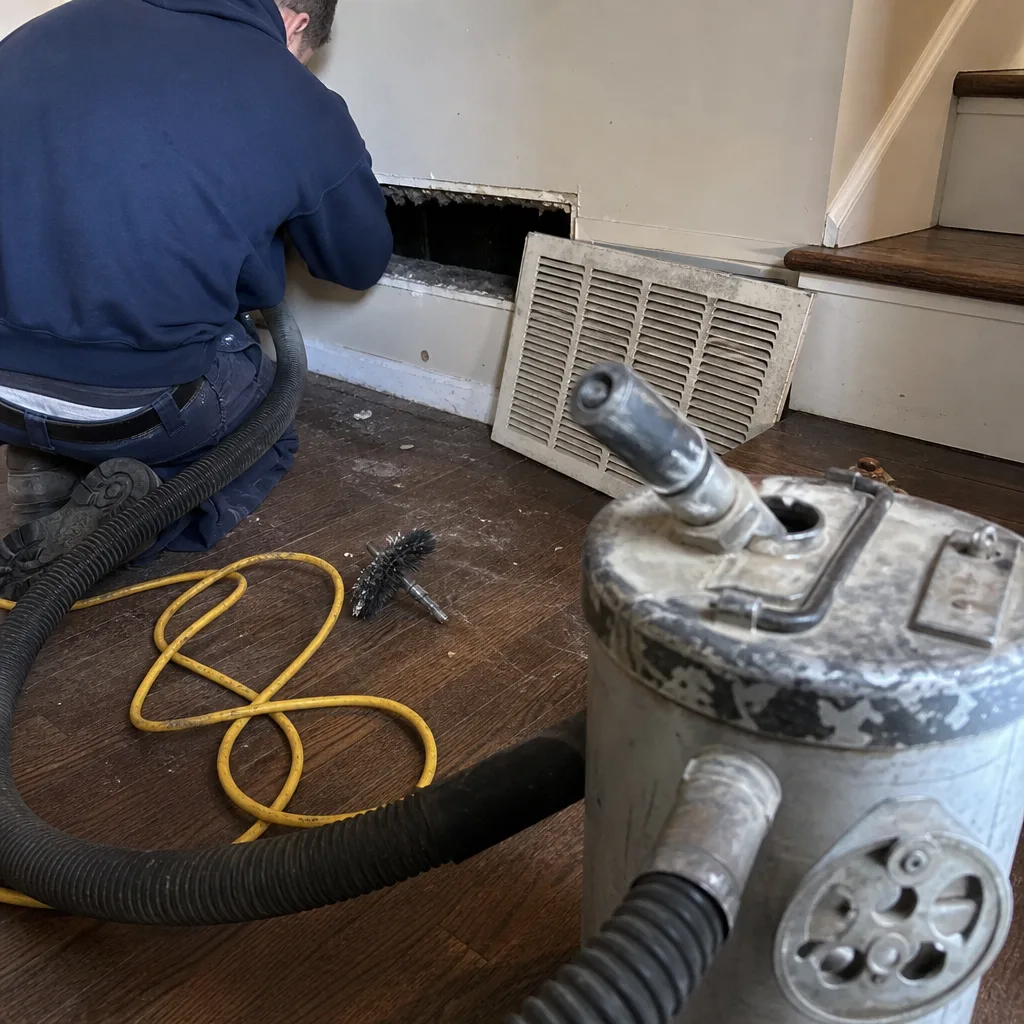 Before
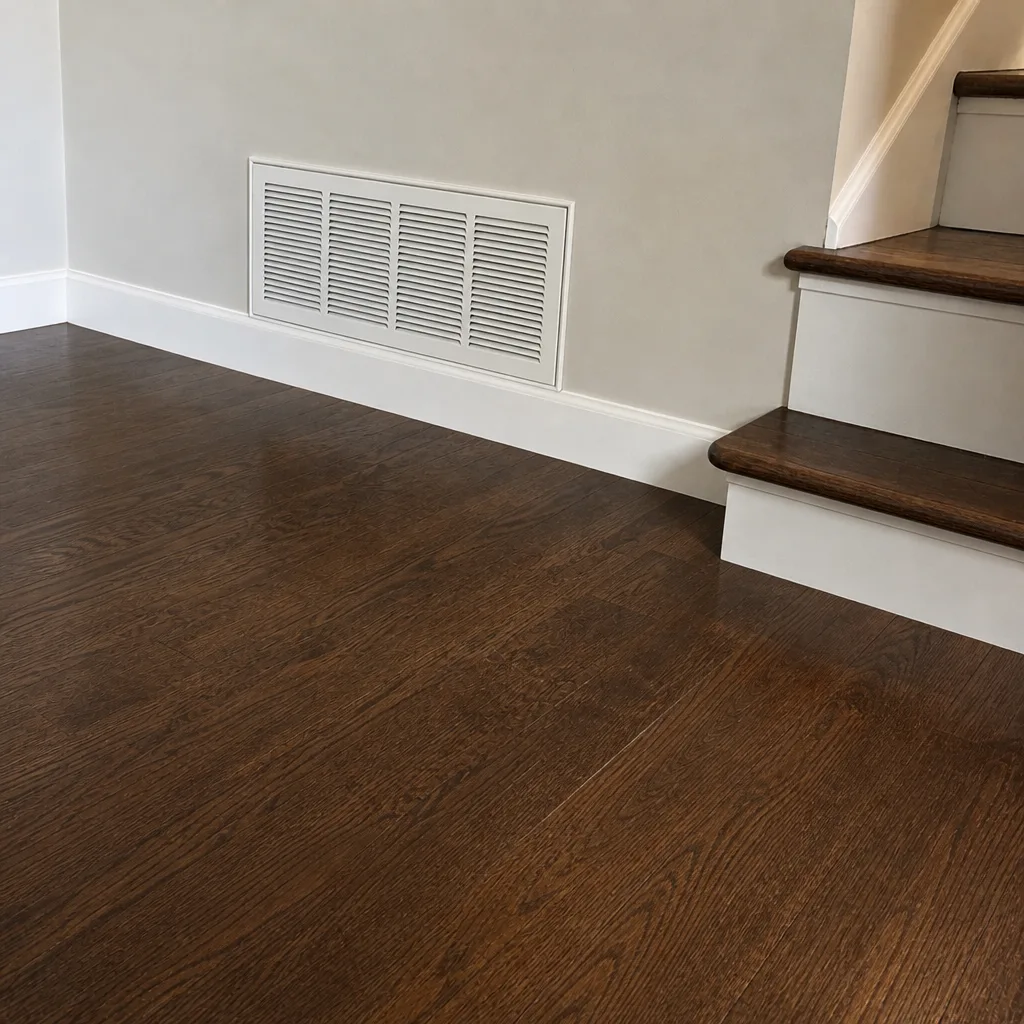 After
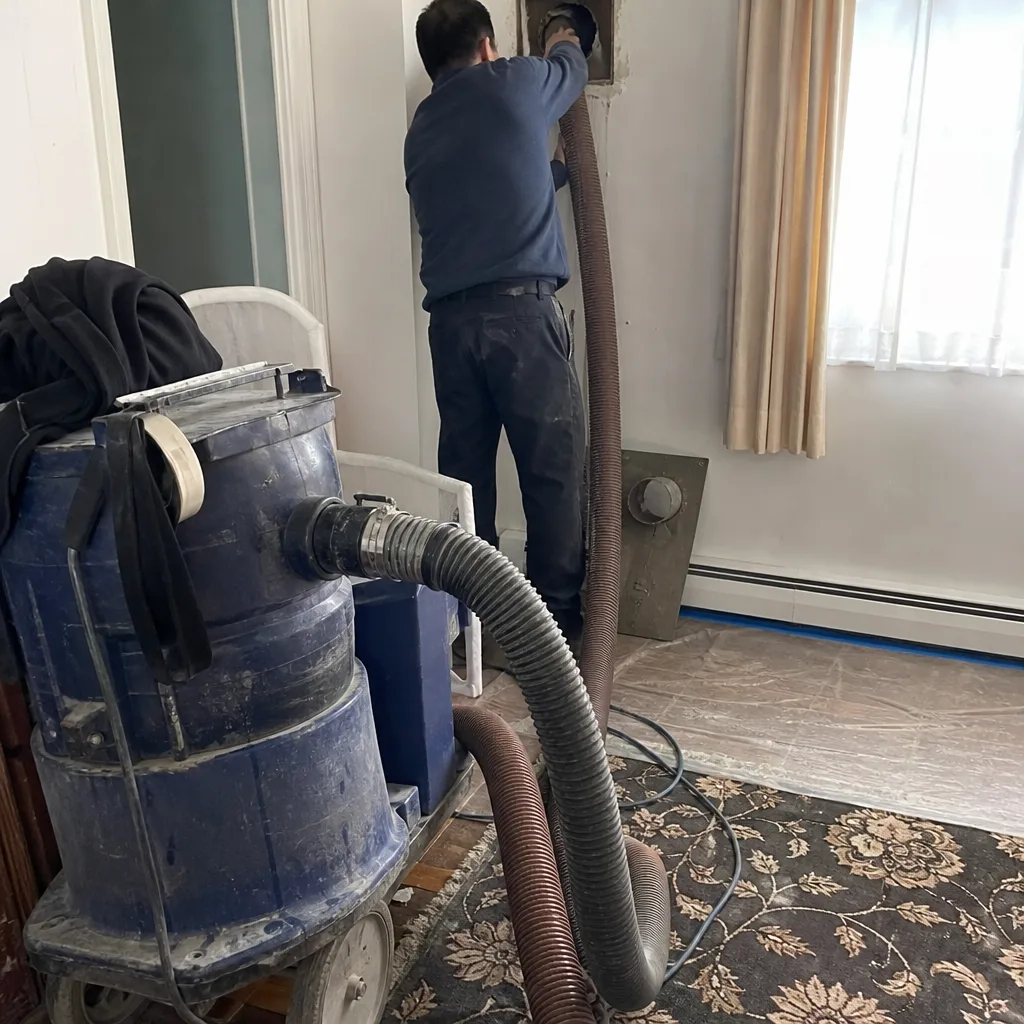 Before
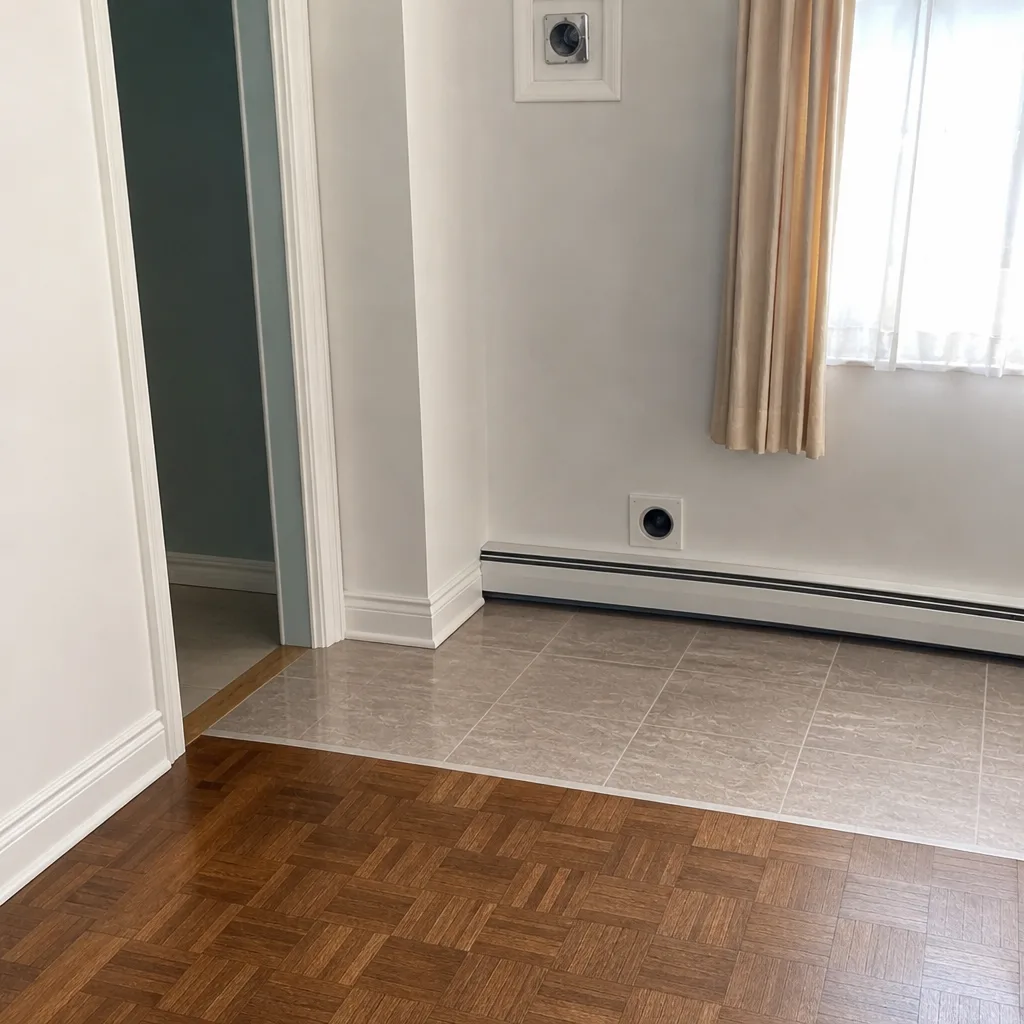 After
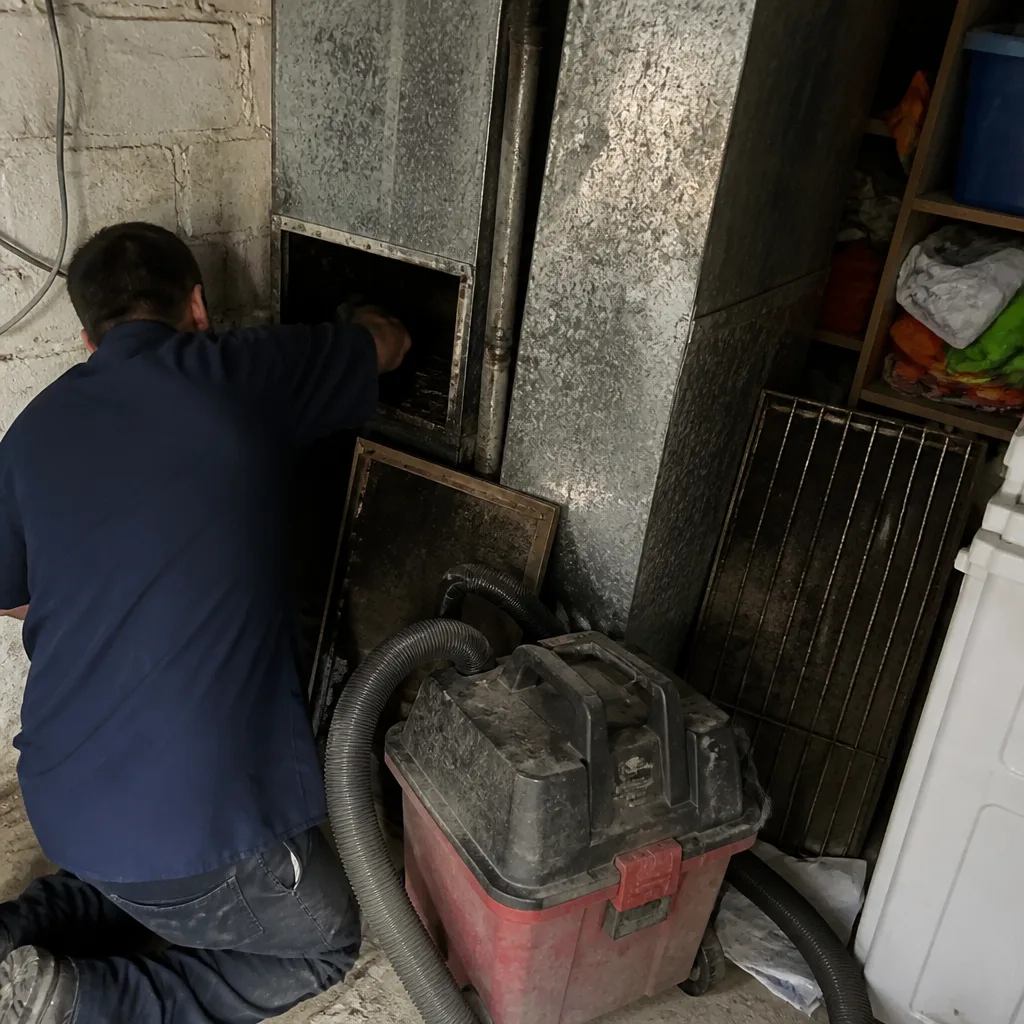 Before
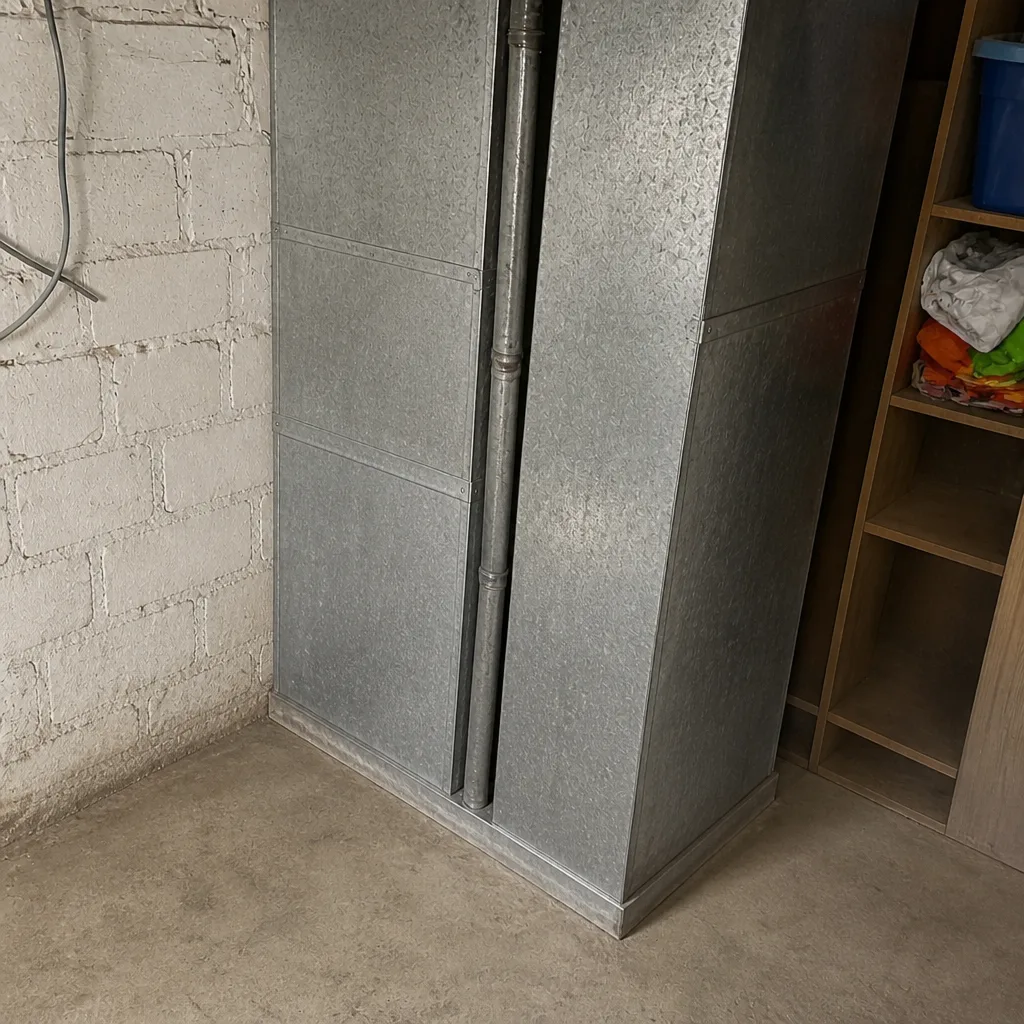 After
When to Call a Professional
Some signals call for a professional assessment, not a DIY effort. If anyone in the home has new or worsening allergy symptoms that don’t track to a seasonal change, that’s worth a look. If a musty odor shows up when the HVAC runs, that’s a sign of moisture where it shouldn’t be, often mold growth on the evaporator coil or in the duct lining. If you’ve recently finished a renovation, drywall dust and construction debris often lodge in the return trunk and need source removal, not just a filter change. Visible dust streaking around supply registers, low airflow on some vents but not others, or a blower that sounds rough all point to a system that needs more than homeowner attention.
Air Duct Cleaning Pelham Bay offers free estimates in Pelham Bay. Call (877) 492-4238. We answer 24/7. Fast dispatch from 7am to 7pm, Sunday through Friday. If you’re outside dispatch hours, a call is booked into the next opening. A licensed, insured technician arrives to assess the system, answer the three equipment questions above without hesitation, and give you a written scope before any work begins.
Frequently Asked Questions
There’s no fixed number because scope varies, but a legitimate whole-system cleaning in Pelham Bay is priced per job by a written estimate, not per vent. The written estimate is the price. Any quote that seems dramatically lower than others usually reflects consumer-grade equipment, missing components, or both. Call (877) 492-4238 for an exact quote. Estimates are free.
A low quote is usually a different service, not a discount on the same one. The common Pelham Bay example is the $79 whole-house special, which typically runs a portable shop-vac-class machine that cannot pull debris off duct walls. You’re not getting a $79 cleaning; you’re paying $79 for a machine to appear. Compare quoted equipment, CFM, contact tools, and listed components, not just the totals.
Ask for before-and-after photographs of the ducts and register boots, plus a written summary of the components cleaned and the equipment used. A professional contractor provides these as standard practice. If the contractor can’t show what they cleaned, they either didn’t clean it or can’t prove they did.
Same-day scheduling depends on the day and the job. Call (877) 492-4238 to find out what’s available. We answer 24/7. Fast dispatch from 7am to 7pm, Sunday through Friday. A call outside dispatch hours is booked into the next opening, Sunday through Friday, 7am to 7pm.
Most homes don’t need annual duct cleaning. The industry standard is to have it assessed when there’s a specific reason: visible debris, mold growth, a pest problem, recent renovation, or persistent allergy symptoms. A home with normal filter maintenance on a Pelham Bay forced-air system often goes several years between cleanings. If someone tells you it’s an annual requirement, ask why for your specific system. Call (877) 492-4238 with questions; estimates are free.
No, sanitizing is a separate service. It’s a real service when the system has mold spores, bacteria, or a persistent odor problem. Ask for the evidence that justifies adding it, and ask what product is used. Our sanitizing service uses Honeywell and Aprilaire product lines, with Guardsman-grade protective treatments available depending on the situation. Call (877) 492-4238 for the assessment; estimates are free.
The Bottom Line
Hiring an air duct cleaning contractor in Pelham Bay comes down to asking good questions and demanding paper. The three questions that do most of the work are simple: what negative-pressure unit, what CFM, and does contact cleaning reach the register boots. A specialist answers all three. A part-timer pivots to price. The rest is protection: a written scope of work that lists every component, current licensing and insurance you can verify, and before-and-after photos so you don’t have to take anyone’s word for it. The cheapest bid usually isn’t. The documented bid is. Our technicians have up to 14 years of experience helping homeowners through exactly this decision.
Call (877) 492-4238 for a free estimate. We answer 24/7. Fast dispatch from 7am to 7pm, Sunday through Friday. Whether you’ve just moved into a Pelham Bay house, finished a renovation, or you’re trying to understand why the system never quite seems clean, a proper assessment and a written scope are the starting point.
Written by the team at Air Duct Cleaning Pelham Bay.